

How are the right Swimming pool waterproofing selected?
INTRODUCTION
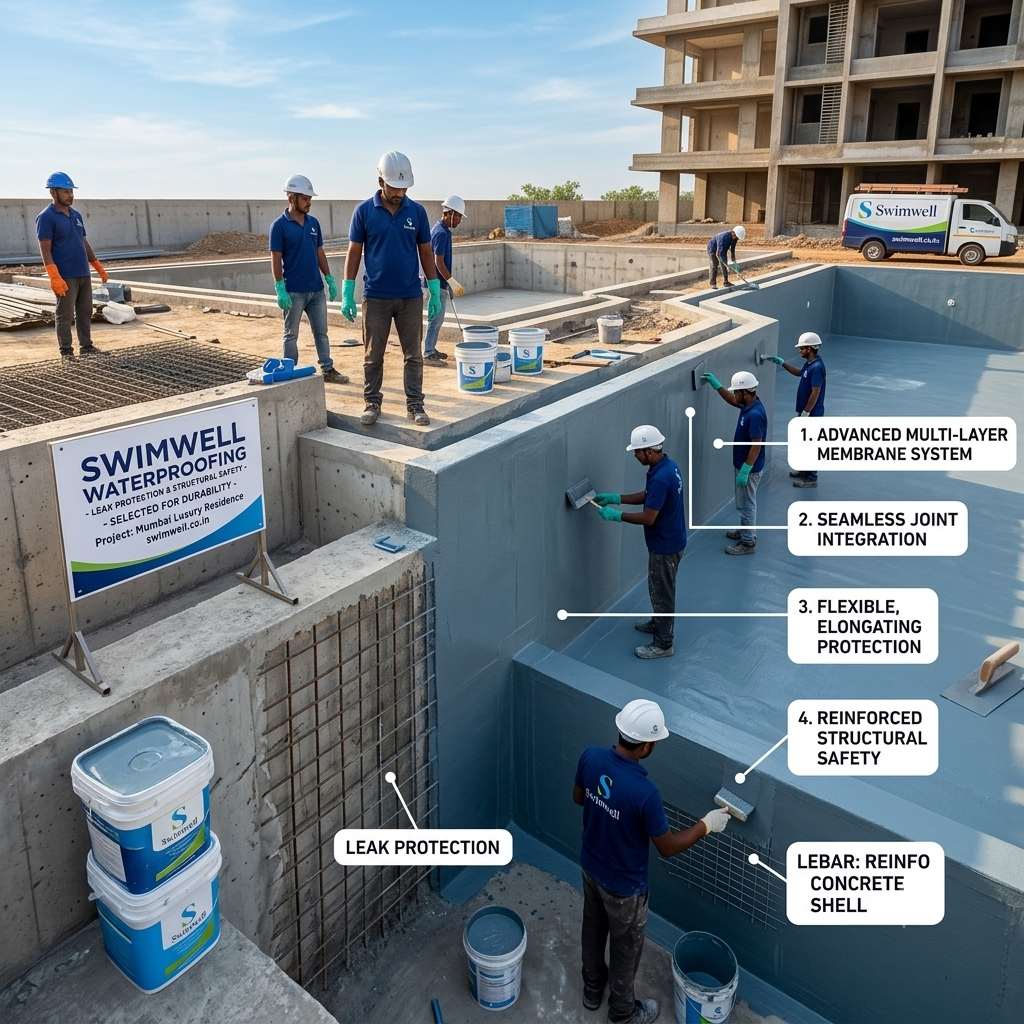
Swimming pool waterproofing is an essential part of constructing, renovating, and maintaining a durable swimming pool. Choosing the right waterproofing approach requires careful consideration of several factors, including the pool's structural condition, construction method, surface type, water exposure, location, and intended use. A suitable waterproofing system helps protect the pool structure from water penetration and supports the long-term performance of the pool.
Every swimming pool project is different. A newly constructed concrete pool may require a different waterproofing approach from an older pool undergoing renovation. Similarly, a rooftop swimming pool may have different requirements compared with a ground-level pool because of its exposure to weather and surrounding structures. Professional assessment is therefore important before selecting a waterproofing system.
Why Is Pool Waterproofing Important?
Swimming pools are constantly exposed to water. Without proper protection, water can potentially penetrate through cracks, joints, porous surfaces, or weak points in the structure.
Effective waterproofing can help:
- Protect the pool shell
- Reduce water penetration
- Minimize the risk of leaks
- Protect surrounding structures
- Support durable interior finishes
- Improve long-term pool performance
Waterproofing is particularly important because repairing leaks after construction or finishing work can be more complicated than addressing waterproofing during the appropriate stage of a project.
What Factors Determine the Right Waterproofing Solution?
Several factors should be evaluated before selecting a waterproofing method.
These may include:
- Pool construction type
- Structural condition
- Surface material
- Pool location
- Water pressure
- Ground conditions
- Climate
- Exposure to weather
- Type of interior finish
- New construction or renovation
A professional assessment helps identify the most appropriate approach for the specific project.
Considering the Pool Structure
The construction material and structural design of the pool are important considerations.
Concrete pools, for example, may have different waterproofing requirements compared with pools constructed using other systems.
Professionals assess:
- Concrete condition
- Structural cracks
- Expansion joints
- Construction joints
- Pipe penetrations
- Surface irregularities
The waterproofing system should be compatible with the pool structure and capable of handling its specific conditions.
New Pool Construction
During new pool construction, waterproofing can be integrated into the overall structural planning process.
Professionals may consider waterproofing requirements before:
- Concrete work
- Surface preparation
- Plumbing installation
- Interior finishing
- Tile installation
Early planning allows waterproofing to be coordinated with other components of the pool.
Existing Pool Renovation
Older pools may require a different waterproofing approach. Before applying a new system, professionals typically inspect the existing structure.
They may look for:
- Cracks
- Damp areas
- Previous repairs
- Surface deterioration
- Water leakage
- Failed waterproofing layers
The existing surface may need cleaning, preparation, repair, or removal of damaged materials before a new waterproofing system is applied.
Understanding Water Pressure
Swimming pools are continuously exposed to water pressure. The waterproofing system must be appropriate for the conditions surrounding the pool.
Professionals may consider:
- Internal water pressure
- External moisture
- Groundwater conditions
- Pool depth
- Structural movement
These factors can influence the selection of an appropriate waterproofing approach.
Considering Pool Location
The location of a swimming pool can significantly affect waterproofing requirements.
Ground-level pools may have different conditions from:
- Rooftop pools
- Basement pools
- Elevated pools
- Indoor pools
For example, rooftop pools may require additional consideration for waterproofing, drainage, and protection of the building structure below.
Climate and Weather Conditions
Climate is another important consideration. Pools in regions with heavy rainfall, high humidity, strong sunlight, or significant temperature variations may experience different environmental stresses.
Professionals may consider:
- Rainfall
- Humidity
- Temperature changes
- UV exposure
- Seasonal weather
The selected waterproofing system should be appropriate for the local environmental conditions.
Surface Preparation
Even a high-quality waterproofing system may not perform effectively if the surface is not properly prepared.
Preparation may include:
- Cleaning
- Removing loose materials
- Repairing cracks
- Smoothing uneven areas
- Treating joints
- Addressing damaged concrete
Proper preparation helps create a suitable surface for waterproofing application.
Waterproofing Around Pipe Penetrations
Pool plumbing often passes through the pool structure. These areas can become potential points of water penetration if they are not properly sealed.
Professionals pay attention to:
- Pipe penetrations
- Drain connections
- Skimmer openings
- Return lines
- Equipment connections
Waterproofing details around these areas should be carefully planned and executed.
Treating Joints and Cracks
Joints and cracks require special attention during waterproofing.
Professionals may evaluate:
- Construction joints
- Expansion joints
- Movement joints
- Structural cracks
The appropriate treatment depends on the type and cause of the joint or crack. Simply covering a structural problem without addressing its underlying cause may not provide a long-term solution.
Choosing Between Waterproofing Methods
Different waterproofing technologies may be suitable for different pool conditions.
Depending on the project, professionals may consider:
- Cementitious waterproofing
- Flexible waterproofing membranes
- Liquid-applied systems
- Protective coatings
- Specialized repair systems
The right choice depends on the pool structure, substrate, expected movement, water exposure, and finishing requirements.
Flexible Waterproofing Systems
Some pools may benefit from waterproofing systems that can accommodate limited movement or minor substrate changes.
These systems may be considered where:
- Temperature changes occur
- Minor structural movement is expected
- Flexible protection is required
However, the suitability of any system should be assessed according to the specific pool structure and conditions.
Waterproofing and Pool Finishes
The waterproofing system should work well with the planned interior finish.
Common finishes include:
- Ceramic tiles
- Glass mosaics
- Natural stone
- Pebble finishes
- Specialized pool coatings
Compatibility between waterproofing and finishing materials is important for achieving a durable result.
Waterproofing for Rooftop Pools
Rooftop pools require particularly careful planning because water leakage can affect occupied spaces or structures below.
Professionals may evaluate:
- Building structure
- Waterproofing layers
- Drainage
- Pipe penetrations
- Pool shell
- Surrounding deck
A coordinated approach can help protect both the pool and the building.
Importance of Drainage
Waterproofing and drainage work together. Even an effective waterproofing system should be supported by appropriate drainage planning.
Professionals may consider:
- Pool deck drainage
- Overflow systems
- Rainwater management
- Equipment area drainage
- Surrounding surfaces
Effective drainage helps prevent unwanted water accumulation around the pool structure.
Selecting Waterproofing for Renovation Projects
Renovation projects often require a customized approach because existing structures may contain previous waterproofing layers.
Professionals may first determine:
- What waterproofing system was previously used
- Whether it has failed
- Where leaks are occurring
- Whether the substrate is stable
- Whether old materials need removal
This information helps determine whether the existing waterproofing can be repaired or whether a new system should be installed.
Professional Inspection and Testing
Before finalizing the waterproofing approach, professional inspection can help identify potential weaknesses.
Depending on the project, professionals may conduct:
- Visual inspections
- Moisture assessments
- Leak investigations
- Surface evaluations
- Water testing
Testing can help verify whether the waterproofing system is performing as intended.
Why Professional Selection Matters
Selecting a waterproofing solution requires more than choosing a product. The system must be suitable for the structure, correctly installed, and properly integrated with plumbing, drainage, and pool finishes.
Professional expertise can help ensure that:
- The substrate is properly prepared
- Cracks and joints are addressed
- Pipe penetrations are sealed
- Waterproofing is applied correctly
- Finishes are compatible
- Potential problem areas are identified
This comprehensive approach can help reduce the risk of future water-related problems.
Benefits of Choosing the Right Waterproofing System
A suitable waterproofing system can provide several long-term benefits.
These include:
- Better protection against water penetration
- Reduced risk of leakage
- Improved structural protection
- Better compatibility with pool finishes
- Increased durability
- Improved renovation results
- Greater confidence in long-term pool performance
The goal is to create a waterproofing system that works as part of the entire pool structure rather than functioning as an isolated layer.
Conclusion
The right Swimming pool waterproofing solution is selected by carefully evaluating the pool's construction, structural condition, surface, location, climate, water exposure, plumbing details, drainage, and interior finish requirements. New pools and renovation projects may require different approaches, while rooftop, indoor, commercial, and residential pools can each present unique waterproofing challenges. Professional assessment and proper surface preparation are essential for choosing and applying an appropriate system. By taking a project-specific approach, property owners can protect their pool structure, reduce the risk of water penetration, and support long-term durability. For reliable waterproofing guidance and professional pool solutions, Swimwell Pools offers expertise tailored to individual project requirements, while experienced swimming pool companies continue to provide specialized waterproofing solutions for new construction and renovation projects.
Frequently Asked Questions (FAQs)
1. How are the right Swimming pool waterproofing solutions selected?
The right solution is selected by evaluating the pool structure, surface condition, location, water exposure, climate, plumbing, drainage, and type of interior finish.
2. Is the same waterproofing system suitable for every swimming pool?
No. Different pools have different structural and environmental conditions, so waterproofing should be selected according to the specific project requirements.
3. Does an existing pool require special waterproofing assessment?
Yes. Older pools should be inspected for cracks, leaks, damaged surfaces, and previous waterproofing failures before selecting a renovation waterproofing system.
4. Can waterproofing be applied around pool plumbing?
Yes. Pipe penetrations, drains, skimmers, and return lines require careful detailing to help prevent potential water penetration.
5. Why is professional waterproofing assessment important?
Professional assessment helps identify structural conditions and potential weak points, allowing the waterproofing system to be selected and applied according to the pool's specific requirements.
Read Our Previous Blog------>Does a swimming pool consultant assist with pool equipment planning?
- הפינה המשפטית
- ביטחון, אבטחה ומודיעין
- אבטחת אישים
- אבטחת מידע וסייבר
- רישוי עסקים
- אירועים תחת כיפת השמיים
- אבטחת מתקנים ואתרים
- מעברי גבול ו תעופה
- בתי ספר להכשרת ומכללות ביטחון
- כלי ירייה מטויחים וחנויות נשק
- אבטחה בתחבורה
- מנב"טים קב"טים קמעונאיים
- אחר
- הגנת הפרטיות
- מודיעין עסקי וארגוני
- פרשנות
- סיקורים
- רחפנים
- גילוי דעת
- כתבות
- מיומנו של קב"ט / מנב"ט

 Hebrew