
What Is Vibe Coding? The Future of AI-Assisted Programming
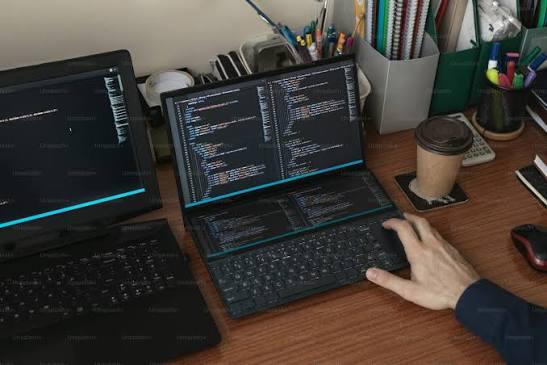
What Is Vibe Coding? Vibe coding is an AI-assisted approach to software development in which users describe what they want to create, modify, or fix using natural language, while artificial intelligence generates or changes the underlying code. Instead of manually writing every line, developers can communicate their goals to an AI coding assistant and refine the results through prompts, testing, and feedback.
The growing capabilities of generative AI are changing the way software is designed and developed. AI can now assist with code generation, debugging, documentation, testing, and technical explanations. Vibe coding represents one of the most visible examples of this transformation because it allows people to interact with programming systems using conversational instructions.
Although the technology can make development faster and more accessible, it does not remove the need for programming knowledge. Understanding how vibe coding works, its advantages, limitations, and future role can help developers use it more effectively.
What Is Vibe Coding?
Vibe coding is a conversational programming workflow where a person describes an intended result and an AI system attempts to translate that description into code.
For example, a developer might ask an AI assistant to create a responsive website with a navigation menu, contact form, user login, and mobile-friendly layout. The AI can generate the initial code. The developer can then test the website and request changes.
The interaction may continue with instructions such as:
“Make the navigation menu easier to use on mobile devices.”
“Add validation to the registration form.”
“Fix the error that appears when the form is submitted.”
The AI generates updated code based on these instructions.
This makes vibe coding an iterative process rather than a single automated action.
How Does Vibe Coding Work?
A typical vibe coding workflow begins with a clear objective. The user explains the problem or desired functionality in natural language.
The AI analyzes the request and generates code based on the available context. The user then runs or reviews the generated implementation.
If the result is incorrect, the user provides additional information. The AI may modify the existing code or suggest an alternative approach.
The process generally follows this cycle:
Idea → Prompt → Code Generation → Testing → Feedback → Refinement
For simple applications, this process can produce results quickly. For complex applications, developers need to provide more detailed requirements and perform extensive testing.
Why Is Vibe Coding Becoming Popular?
One major reason is the accessibility of AI-powered development tools. Users no longer need to know every programming syntax rule before experimenting with software creation.
Vibe coding also supports rapid prototyping. Developers can create a basic version of an idea and evaluate it before spending substantial time on manual implementation.
Another factor is productivity. Experienced developers can use AI to handle repetitive coding tasks while focusing on architecture, system design, and complex problem solving.
AI can also explain unfamiliar code and technologies, making it useful for developers who are learning a new framework or programming language.
Key Benefits of AI-Assisted Programming
Faster Prototyping
AI can generate an initial application structure quickly. This makes it easier to turn ideas into prototypes and test concepts.
Reduced Repetitive Work
Developers can ask AI to generate boilerplate code, basic functions, components, documentation, or test cases.
Easier Debugging
AI can analyze error messages and suggest possible solutions. Developers can use these suggestions as a starting point for investigation.
Improved Learning
AI can explain programming concepts in conversational language. Beginners can ask follow-up questions and receive examples related to their projects.
Greater Accessibility
People who are not experienced programmers can experiment with software development by describing their requirements in natural language.
Rapid Iteration
Developers can request changes quickly and evaluate different approaches without manually rewriting large amounts of code.
Limitations of Vibe Coding
Despite its advantages, vibe coding has important limitations.
AI Can Generate Incorrect Code
AI systems can produce code that looks correct but contains logical errors. A program may work for common inputs while failing in unusual circumstances.
Security Risks
Generated code may contain vulnerabilities involving authentication, authorization, input validation, or sensitive data. Security-critical applications require careful review.
Lack of Project Context
AI may not fully understand an organization's business requirements or long-term technical goals. Without sufficient context, it can make unsuitable implementation decisions.
Maintainability Problems
Repeatedly adding features through separate AI prompts can create inconsistent structures, unnecessary dependencies, or difficult-to-maintain code.
Overreliance on AI
Developers who depend completely on generated code may lose opportunities to develop their own problem-solving and programming skills.
For these reasons, human review remains an essential part of responsible AI-assisted development.
Does Vibe Coding Replace Programmers?
Vibe coding is unlikely to completely replace professional programmers.
Programming involves more than writing source code. Developers must understand requirements, design software architecture, manage databases, consider security, test systems, optimize performance, deploy applications, and maintain them over time.
AI can assist with many of these activities, but it cannot automatically determine whether a solution is appropriate for every business or technical situation.
Instead of eliminating developers, AI is more likely to change their responsibilities.
Developers may spend less time manually writing repetitive code and more time reviewing AI-generated solutions, designing systems, testing applications, and solving complex problems.
Vibe Coding and Traditional Programming
Traditional programming involves directly writing and maintaining source code. Vibe coding introduces AI as an intermediary that converts natural-language instructions into code.
Traditional programming provides developers with detailed control over implementation. Vibe coding emphasizes speed, conversational interaction, and iterative development.
The approaches can work together. A developer might use AI to generate an initial implementation and then manually review, modify, test, and optimize it.
This hybrid model can provide the productivity benefits of AI while maintaining traditional engineering standards.
How Developers Can Use Vibe Coding Effectively
Developers can improve their results by writing clear prompts. Instead of giving vague instructions, they should explain the desired functionality, technology, constraints, expected behavior, and relevant project context.
Large projects should be divided into smaller tasks. This makes it easier to review AI-generated changes and identify problems.
Testing should happen continuously. Developers should test normal use cases, unexpected inputs, error conditions, and security-sensitive functionality.
Generated code should also be reviewed before deployment. Developers should look for unnecessary dependencies, inefficient algorithms, security vulnerabilities, and inconsistent architecture.
Version control is another important practice because it makes it easier to compare AI-generated changes and return to a stable version when necessary.
The Future of AI-Assisted Programming
The future of vibe coding is likely to involve increasingly capable AI systems. Future development assistants may understand entire codebases rather than individual snippets and may be able to reason about dependencies, testing, deployment, and application architecture.
AI could automatically generate tests, identify potential bugs, suggest performance improvements, and coordinate changes across multiple parts of a project.
This could allow developers to work at a higher level of abstraction. Instead of spending most of their time writing routine code, they may focus more on defining requirements and reviewing AI-generated implementations.
Natural-language interfaces may also become more deeply integrated into development environments, allowing programmers to describe changes without constantly switching between documentation, editors, and debugging tools.
Skills Developers Will Need
The rise of AI-assisted programming does not make technical skills irrelevant. Instead, the most valuable skills may change.
Developers will need strong problem-solving abilities and a good understanding of software architecture. They will also need to evaluate AI output critically.
Knowledge of security, databases, testing, APIs, algorithms, and system design will remain important.
Prompting and communication skills will also become useful because developers need to explain requirements clearly to AI systems.
The strongest developers may therefore be those who combine traditional programming fundamentals with the ability to collaborate effectively with AI.
Is Vibe Coding Suitable for Beginners?
Vibe coding can be an excellent way for beginners to experiment with software. A learner can start with a small project and ask AI to explain each section of the generated code.
However, beginners should avoid treating AI as a replacement for learning programming fundamentals.
Understanding variables, functions, loops, conditions, data structures, APIs, databases, and basic security will make it easier to evaluate AI-generated solutions.
The goal should be to use AI as a learning and development partner rather than a black box.
Conclusion
What Is Vibe Coding? It is a conversational approach to AI-assisted programming where users describe software requirements in natural language and work with artificial intelligence to generate, modify, debug, and refine code.
Vibe coding can accelerate development, simplify prototyping, reduce repetitive work, and make programming more accessible. At the same time, it can produce incorrect code, security vulnerabilities, architectural problems, and maintenance challenges.
The future of programming is therefore unlikely to be entirely manual or entirely automated. Instead, AI and human developers are likely to work together.
AI can handle repetitive implementation and provide rapid suggestions, while developers remain responsible for requirements, architecture, testing, security, and final decisions. By combining strong programming fundamentals with effective AI collaboration, developers can take advantage of vibe coding while maintaining control over software quality and reliability.
- הפינה המשפטית
- ביטחון, אבטחה ומודיעין
- אבטחת אישים
- אבטחת מידע וסייבר
- רישוי עסקים
- אירועים תחת כיפת השמיים
- אבטחת מתקנים ואתרים
- מעברי גבול ו תעופה
- בתי ספר להכשרת ומכללות ביטחון
- כלי ירייה מטויחים וחנויות נשק
- אבטחה בתחבורה
- מנב"טים קב"טים קמעונאיים
- אחר
- הגנת הפרטיות
- מודיעין עסקי וארגוני
- פרשנות
- סיקורים
- רחפנים
- גילוי דעת
- כתבות
- מיומנו של קב"ט / מנב"ט

 English