Modern power transmission and distribution systems demand conductors that deliver high efficiency, long service life, corrosion resistance, and cost-effective performance. As utility networks continue expanding into coastal regions, industrial zones, urban infrastructures, and renewable energy projects, selecting the right overhead conductor has become a critical engineering and procurement decision.
Among the most widely adopted solutions in today’s utility sector is the AAAC conductor (All Aluminum Alloy Conductor). Known for its excellent strength-to-weight ratio, superior corrosion resistance, and improved electrical performance, AAAC conductors are increasingly replacing conventional conductors in medium- and high-voltage overhead transmission lines.
For utilities, EPC contractors, and power distribution companies, choosing the right conductor directly impacts operational reliability, installation costs, maintenance frequency, and long-term network efficiency. This is why many global energy projects now prioritize AAAC conductors for modern transmission infrastructure.
As a global manufacturer of overhead conductors and power cables, HNBF Power provides engineered AAAC conductor solutions designed for demanding utility applications worldwide.
What Is an AAAC Conductor?
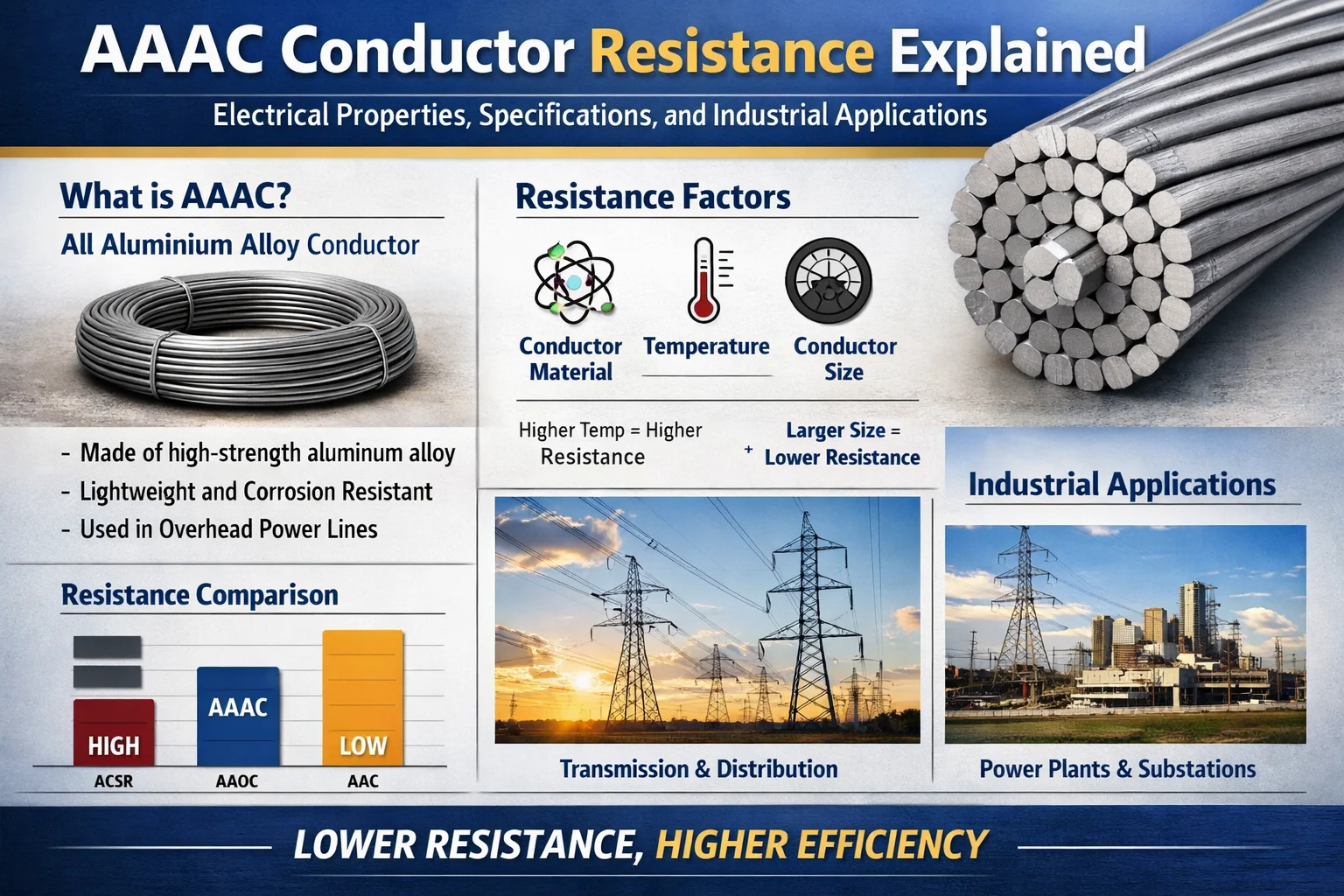
AAAC conductor stands for All Aluminum Alloy Conductor. It is manufactured using high-strength aluminum-magnesium-silicon alloy wires stranded concentrically to create a lightweight yet mechanically strong overhead conductor.
Unlike traditional ACSR conductors that contain a steel core, AAAC conductors are made entirely from aluminum alloy material. This design provides several technical advantages:
- Better corrosion resistance
- Lower conductor weight
- Higher conductivity-to-weight ratio
- Improved sag performance
- Longer operational lifespan
- Reduced maintenance requirements
AAAC conductors are commonly used in:
- Primary and secondary distribution lines
- Medium-voltage transmission systems
- Coastal and humid environments
- Mountainous transmission routes
- Urban grid infrastructure
- Renewable energy projects
- Industrial power distribution systems
Why Market Demand for AAAC Conductors Is Growing
Global energy infrastructure is evolving rapidly. Utilities now require conductors that support:
- Higher power demand
- Reduced transmission losses
- Lower lifecycle costs
- Easier installation
- Improved environmental resistance
- Long-term grid reliability
Traditional conductors often face challenges such as corrosion, excessive sagging, and higher maintenance requirements, especially in aggressive environments. AAAC conductors solve many of these issues while maintaining strong electrical and mechanical performance.
The increasing expansion of renewable energy grids, smart cities, industrial parks, and rural electrification projects has further accelerated market demand for AAAC conductor systems.
Key Technical Advantages of AAAC Conductors
Superior Corrosion Resistance
One of the biggest advantages of AAAC conductors is their exceptional resistance to corrosion.
Because AAAC conductors contain no steel core, they eliminate the galvanic corrosion issues commonly found in ACSR conductors. This makes them highly suitable for:
- Coastal transmission lines
- Chemical plants
- Industrial zones
- High-humidity regions
- Desert environments
- Areas with heavy pollution
For utilities operating in harsh climates, this directly translates into reduced maintenance costs and longer service life.
Lightweight Design with High Strength
AAAC conductors provide an excellent strength-to-weight ratio.
The lightweight structure allows:
- Easier transportation
- Faster installation
- Reduced tower loading
- Lower structural costs
- Improved handling during construction
Despite being lighter, AAAC conductors maintain strong tensile strength due to the aluminum alloy composition.
Better Sag Performance
Sag performance is a critical factor in overhead line engineering.
AAAC conductors offer improved sag characteristics compared to conventional aluminum conductors. Lower sag helps maintain safe ground clearance and reduces mechanical stress on utility structures.
This is especially important for:
- Long-span transmission routes
- Mountainous terrains
- High-temperature operating conditions
- Urban infrastructure projects
Excellent Electrical Conductivity
AAAC conductors deliver strong electrical efficiency with reduced power losses.
Modern utility operators prioritize conductors that minimize energy loss during transmission. AAAC technology supports improved current carrying capacity while maintaining reliable thermal performance.
This helps utilities:
- Improve grid efficiency
- Lower operating costs
- Reduce energy waste
- Enhance network stability
AAAC Conductor vs ACSR Conductor
Corrosion Resistance
AAAC conductors outperform ACSR conductors in corrosive environments because they do not contain a steel core.
Weight
AAAC conductors are generally lighter, making installation easier and reducing structural loading requirements.
Maintenance
ACSR conductors may require more maintenance due to steel core corrosion risks. AAAC conductors significantly reduce these maintenance concerns.
Mechanical Strength
While ACSR conductors offer very high tensile strength for extremely long spans, AAAC conductors provide an excellent balance between strength and conductivity for most distribution and transmission applications.
Service Life
AAAC conductors often achieve longer operational life in coastal and industrial environments.
Common Applications of AAAC Conductors
Urban Power Distribution
Modern cities require compact, reliable, and low-maintenance overhead conductors. AAAC conductors provide excellent durability for dense urban networks.
Coastal Infrastructure Projects
Salt-laden air accelerates conductor corrosion. AAAC conductors are widely preferred for coastal transmission systems because of their strong corrosion resistance.
Renewable Energy Transmission
Solar farms and wind energy projects require efficient transmission systems capable of handling variable loads and long operating hours. AAAC conductors support these modern energy infrastructures effectively.
Industrial Utility Networks
Heavy industrial environments expose conductors to chemicals, heat, and pollutants. AAAC conductors offer reliable long-term performance under these demanding conditions.
Rural Electrification Projects
Many governments and utilities use AAAC conductors for rural power expansion because they combine durability, lightweight installation, and cost efficiency.
Important Factors When Selecting an AAAC Conductor
Current Carrying Capacity
Engineers must calculate the required ampacity based on system demand and future expansion requirements.
Environmental Conditions
Climate conditions such as humidity, pollution, temperature, and wind exposure influence conductor selection.
Mechanical Loading
Transmission span length, wind pressure, and tower design all affect conductor sizing decisions.
Voltage Level
Different transmission and distribution systems require conductors optimized for specific voltage classes.
Compliance Standards
Utilities should ensure conductors comply with international standards such as IEC, ASTM, BS, or DIN specifications.
Why Utilities Choose HNBF Power for AAAC Conductors
HNBF Power manufactures high-quality AAAC conductors designed for modern transmission and distribution networks.
The company supports utilities, EPC contractors, and infrastructure developers with:
- Advanced conductor manufacturing
- International quality compliance
- Customized conductor specifications
- Reliable global supply capability
- Technical engineering support
- Strict quality control systems
HNBF Power’s product portfolio includes:
- AAC conductors
- AAAC conductors
- ACSR conductors
- ABC cables
- LV power cables
- Concentric cables
With growing demand for efficient overhead transmission systems, HNBF Power continues supporting global power infrastructure projects with reliable conductor solutions.
Future Trends in AAAC Conductor Technology
The global power industry is moving toward:
- Smart grid modernization
- Renewable energy integration
- High-efficiency transmission systems
- Sustainable infrastructure development
AAAC conductors are expected to play an increasingly important role in these developments because of their:
- Low maintenance requirements
- Improved efficiency
- Lightweight structure
- Environmental durability
- Long-term operational reliability
As transmission networks expand worldwide, demand for advanced aluminum alloy conductors will continue increasing across utilities and industrial sectors.
FAQs About AAAC Conductors
What does AAAC conductor mean?
AAAC stands for All Aluminum Alloy Conductor. It is an overhead conductor made entirely from aluminum alloy strands designed for power transmission and distribution systems.
Where are AAAC conductors commonly used?
AAAC conductors are widely used in overhead distribution lines, coastal transmission systems, industrial infrastructure, renewable energy projects, and urban utility networks.
What is the main advantage of AAAC conductor?
The biggest advantage is its superior corrosion resistance combined with lightweight construction and excellent mechanical performance.
Is AAAC better than ACSR?
AAAC is often preferred in corrosive environments because it does not contain a steel core. However, conductor selection depends on project requirements, span length, and mechanical loading conditions.
Why do utilities prefer AAAC conductors?
Utilities prefer AAAC conductors because they reduce maintenance costs, improve transmission reliability, and provide longer service life in challenging environments.
Conclusion
AAAC conductors have become an essential solution for modern power transmission and distribution systems. Their corrosion resistance, lightweight structure, strong electrical performance, and long-term reliability make them highly suitable for today’s demanding utility applications.
As energy infrastructure projects continue expanding globally, utilities and EPC contractors increasingly require conductors that balance performance, durability, and cost efficiency. AAAC conductors successfully meet these requirements across urban, industrial, coastal, and renewable energy networks.
For customized AAAC conductor solutions tailored to your utility or infrastructure project, contact HNBF Power today and discuss your technical and procurement requirements with their experienced engineering team.



 English