

Spot Resistance Welder: Principles, Applications, and Industrial Best Practices
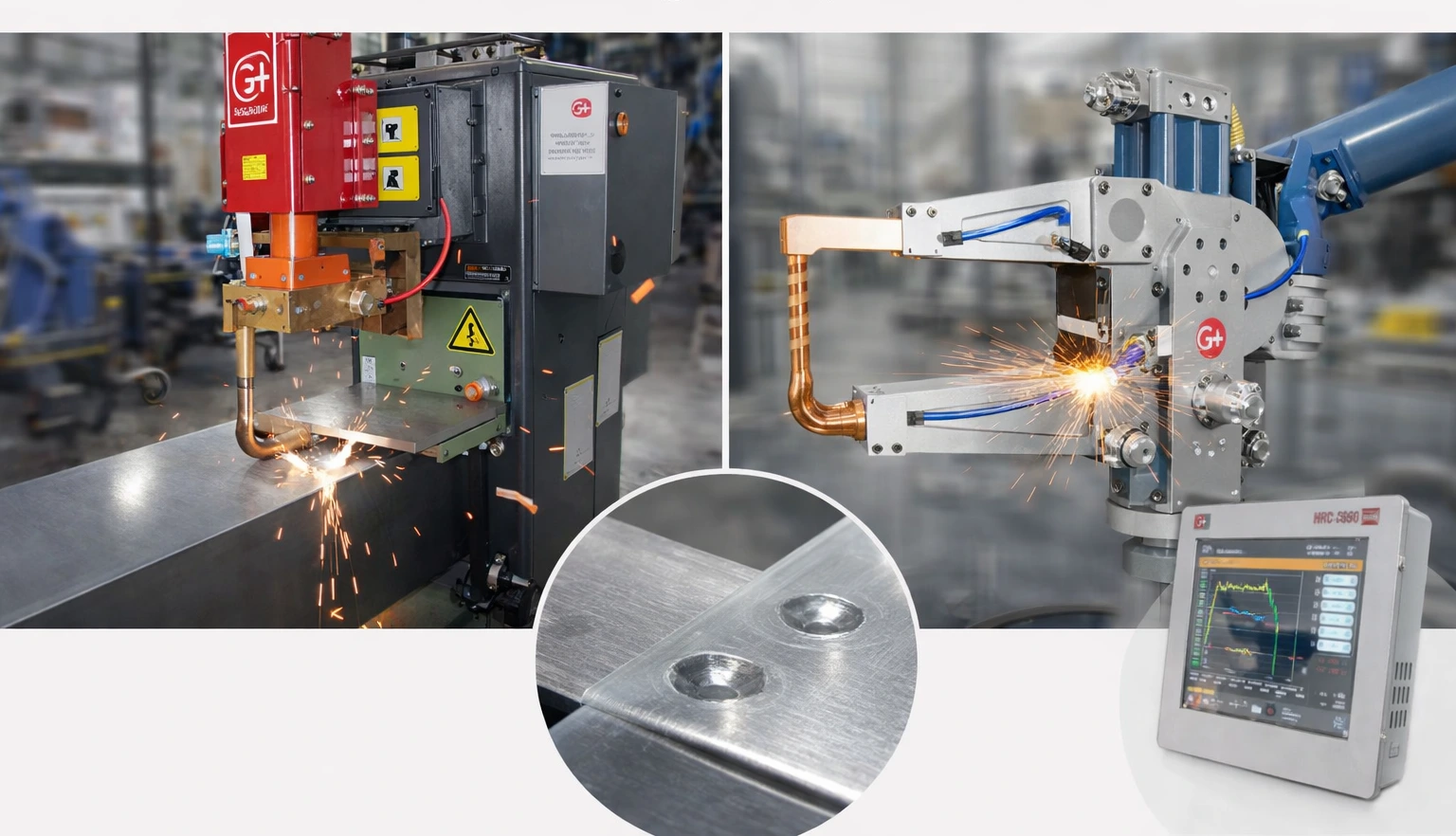
A spot resistance welder is one of the most widely used industrial welding systems for joining sheet metal components efficiently, consistently, and at high production speeds. It is a core process in modern manufacturing industries such as automotive, home appliances, electrical enclosures, HVAC systems, and metal fabrication.
This welding method uses controlled electrical current and pressure to generate heat at the interface of two overlapping metal sheets. The localized heat forms a molten "weld nugget," which solidifies under pressure to create a strong, durable joint.
For OEMs, production engineers, and automation integrators, understanding the behavior, parameters, and machine capabilities of a spot resistance welder is critical for achieving high-quality, repeatable welds in mass production environments.
How a Spot Resistance Welder Works
The working principle of a spot resistance welder is based on Joule heating (I²R effect) , where electrical resistance generates heat.
H3: Basic Welding Cycle
- Electrode Contact
Copper alloy electrodes clamp the metal sheets together with controlled force. - Current Application
A high electrical current passes through the workpieces. - Heat Generation
Resistance at the contact interface generates localized heat. - Nugget Formation
The metal melts at the interface, forming a weld nugget. - Solidification
Pressure is maintained while the weld cools and solidifies. - Release
Electrodes retract, completing the weld cycle.
This process happens within milliseconds, making it highly suitable for automated and high-speed production lines.
Key Components of a Spot Resistance Welding System
A modern industrial spot resistance welder includes several integrated components designed for precision and durability:
Welding Transformer
Converts incoming power into low-voltage, high-current output required for welding.
Welding Electrodes
Typically made of copper alloys to ensure conductivity and heat resistance.
Controller Unit
Regulates current, weld time, and force for consistent weld quality.
Pneumatic or Servo Force System
Applies controlled pressure during welding.
Cooling System
Maintains electrode and transformer temperature stability during continuous operation.
Advanced systems may also include robotic arms and PLC-based automation for full production line integration.
Industrial Applications of Spot Resistance Welders
A spot resistance welder is essential in industries where sheet metal joining is required at scale.
Automotive Manufacturing
Used for car body panels, chassis components, and structural reinforcements. Automotive production lines often use hundreds of spot welds per vehicle.
Electrical Equipment Manufacturing
Ideal for control cabinets, switchgear panels, and metal enclosures.
HVAC and Sheet Metal Fabrication
Used in air ducts, housings, and ventilation systems.
Home Appliance Industry
Widely used in refrigerators, washing machines, ovens, and metal frames.
Metal Furniture and General Fabrication
Provides strong joints for racks, cabinets, and industrial furniture.
The versatility of spot resistance welding makes it a backbone technology in mass production environments.
Advantages of Spot Resistance Welding
A properly configured spot resistance welder offers multiple benefits for industrial users:
High Production Speed
Welds are completed in fractions of a second, ideal for automated production lines.
Cost Efficiency
No filler materials, flux, or shielding gases are required.
Clean and Consistent Joints
Produces minimal spatter and requires little post-processing.
Easy Automation Integration
Compatible with robotic arms and CNC-controlled systems.
Energy Efficiency
Heat is localized only at the weld point, reducing overall energy loss.
These advantages make it a preferred choice for OEM manufacturers aiming for scalability and repeatability.
Spot Resistance Welder vs Other Welding Methods
Understanding how spot welding compares to other joining techniques helps in selecting the right process.
H3: Spot Welding vs. MIG Welding
- MIG welding uses filler wire and shielding gas
- Spot welding requires no filler material
- Spot welding is faster but limited to sheet metal applications
Spot Welding vs. Laser Welding
- Laser welding offers higher precision and deeper penetration
- Spot welding is more cost-effective for high-volume production
- Laser systems require higher investment and maintenance
Spot Welding vs Riveting or Mechanical Fastening
- Spot welding creates a permanent metallurgical bond
- Mechanical fastening allows disassembly but increases assembly time
For high-speed manufacturing, spot resistance welding remains one of the most economical solutions.
Critical Process Parameters for Quality Welding
To achieve consistent results, engineers must control several key parameters in a spot resistance welder:
Welding Current
Higher current increases heat generation but must be optimized to avoid expulsion or burn-through.
Electrode Force
Proper pressure ensures stable contact resistance and weld nugget formation.
Weld Time
Short cycles improve productivity, but insufficient time can weaken the weld.
Electrode Tip Condition
Worn electrodes reduce efficiency and must be regularly dressed or replaced.
Material Type and Thickness
Different metals require adjusted parameters for optimal welding performance.
Process optimization is essential for maintaining quality in mass production environments.
Automation Trends in Spot Resistance Welding
Modern manufacturing increasingly relies on automated spot resistance welder systems integrated with robotics and smart control systems.
Robotic Welding Cells
Industrial robots improve accuracy and consistency while reducing labor dependency.
PLC and Digital Controllers
Enable precise parameter control and real-time monitoring.
Data-Driven Welding Systems
Advanced machines now collect welding data for quality assurance and predictive maintenance.
Multi-Spot Welding Guns
Increase productivity by performing multiple welds in a single cycle.
These advancements are transforming spot welding into a highly intelligent manufacturing process.
Best Practices for Industrial Use
To maximize efficiency and lifespan of a spot resistance welder, manufacturers should follow these practices:
- Maintain proper electrode alignment
- Regularly clean and dress electrodes
- Monitor cooling water flow and temperature
- Calibrate welding parameters periodically
- Use material-specific welding schedules
- Implement preventive maintenance programs
Proper maintenance not only improves weld quality but also reduces downtime and operational costs.
Why Choose Heron Welder for Spot Resistance Welding Solutions
Heron Welder specializes in designing and manufacturing advanced industrial welding systems tailored for modern production requirements. With a focus on precision engineering and automation compatibility, the company supports manufacturers across the automotive, electrical, and metal fabrication sectors.
Heron's spot resistance welding solutions are designed for:
- High-volume production environments
- OEM-level customization
- Integration with robotic and automated lines
- Long-term operational stability
- Energy-efficient welding performance
By combining engineering expertise with industrial innovation, Heron Welder delivers systems that help manufacturers achieve higher productivity, consistent quality, and reduced production costs.
FAQs About Spot Resistance Welder
1. What materials can a spot resistance welder join?
It is commonly used for low-carbon steel, stainless steel, galvanized steel, and certain aluminum applications with optimized settings.
2. Is spot welding suitable for thick materials?
It is primarily designed for thin to medium sheet metals. Very thick materials may require projection or alternative welding methods.
3. How long does a typical spot weld take?
Most spot welds are completed within milliseconds to a few seconds depending on material thickness and current settings.
4. What industries use spot resistance welding the most?
Automotive, HVAC, appliance manufacturing, electrical enclosures, and general sheet metal fabrication industries.
5. How can weld quality be improved?
By controlling current, force, time, and maintaining electrodes in good condition along with proper machine calibration.
Conclusion and Call to Action
A spot resistance welder remains one of the most efficient and reliable solutions for modern industrial sheet metal joining. Its speed, cost-effectiveness, and compatibility with automation make it essential for high-volume production environments.
For manufacturers looking to improve weld quality, increase production efficiency, or upgrade to automated welding systems, selecting the right technology partner is critical.
Heron Welder provides advanced spot resistance welding systems engineered for precision, durability, and integration into modern manufacturing lines.
Contact Heron Welder today to request a customized quote or consult with our engineering team for tailored welding and automation solutions designed for your production needs.
- הפינה המשפטית
- ביטחון, אבטחה ומודיעין
- אבטחת אישים
- אבטחת מידע וסייבר
- רישוי עסקים
- אירועים תחת כיפת השמיים
- אבטחת מתקנים ואתרים
- מעברי גבול ו תעופה
- בתי ספר להכשרת ומכללות ביטחון
- כלי ירייה מטויחים וחנויות נשק
- אבטחה בתחבורה
- מנב"טים קב"טים קמעונאיים
- אחר
- הגנת הפרטיות
- מודיעין עסקי וארגוני
- פרשנות
- סיקורים
- רחפנים
- גילוי דעת
- כתבות
- מיומנו של קב"ט / מנב"ט

 English