

Micro OLED Display Technology for AR & Wearables Guide
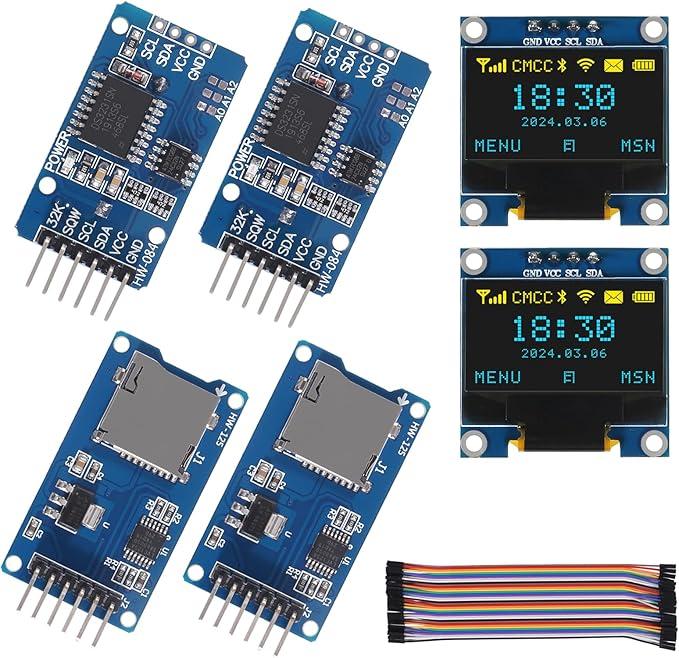
Micro OLED display technology is rapidly changing the world of compact imaging systems used in AR, VR, and advanced optical devices. It offers ultra-high pixel density, deep contrast, and low power use, making it ideal for next-gen wearable displays and near-eye systems enabling immersive optics.!!
Micro OLED displays are built on silicon backplanes, enabling OLED-on-silicon architecture that delivers high brightness, fast response time, and superior contrast for AR headsets, VR goggles, and optical modules This makes them ideal for waveguide AR systems military optics and premium wearables
Micro OLED display technology is widely used in next-generation AR glasses, VR headsets, and compact optical systems where size, efficiency, and image clarity are critical for user experience and industrial applications.
What is Micro OLED Display Technology?
Micro OLED (Organic Light Emitting Diode on Silicon) is a high-performance microdisplay technology where OLED pixels are fabricated directly on a silicon wafer. Unlike traditional displays, it uses self-emissive pixels, meaning each pixel produces its own light without a backlight.
This structure allows extremely high pixel density, often exceeding millions of pixels per inch, making images appear sharp even in very small near-eye displays. It is widely used in AR/VR optical engines where clarity and compact size are essential.
How Micro OLED Works
Micro OLED works on an OLED-on-silicon backplane architecture. The silicon layer controls pixel activation, while the OLED layer emits light.
When electrical signals pass through the silicon circuit, individual OLED pixels illuminate independently. This enables deep blacks, precise color control, and fast refresh rates.
Because there is no backlight, the display achieves higher contrast ratios and lower power consumption compared to LCD systems. This makes it suitable for wearable devices where battery efficiency is critical.
Key Features of Micro OLED Displays
One of the strongest advantages of micro OLED is its extremely high pixel density. This eliminates the “screen door effect” in AR and VR headsets, delivering smoother visuals.
It also offers excellent luminance and color accuracy. The self-emissive nature ensures true blacks and vibrant colors, improving visual realism.
Another key feature is low power consumption. Since pixels light up only when needed, energy efficiency is significantly improved.
Fast response time also reduces motion blur, which is important for immersive applications like gaming, simulation, and training systems.
Applications of Micro OLED Technology
Micro OLED displays are widely used in AR glasses, VR headsets, and mixed reality systems. They provide near-eye visualization with high clarity and minimal distortion.
In defense and aerospace, they are used in helmet-mounted displays and targeting systems due to their compact size and reliability.
Medical imaging devices also benefit from micro OLED panels, especially in surgical microscopes and diagnostic tools requiring precision.
Industrial optical systems and wearable HUDs (heads-up displays) are other growing application areas.
Advantages Over LCD and AMOLED
Compared to LCD, micro OLED offers better contrast, faster response time, and thinner structure. LCDs require backlighting, which reduces efficiency and increases size.
Compared to AMOLED, micro OLED provides higher pixel density and better performance in micro-scale environments. It is especially optimized for near-eye display systems rather than large screens.
The OLED-on-silicon design also improves thermal stability and optical precision, making it ideal for advanced AR optics.
Challenges in Micro OLED Development
Despite its advantages, micro OLED technology faces some challenges. Manufacturing costs are high due to complex silicon wafer integration.
Brightness limitations can also occur in outdoor environments, requiring additional optical enhancement.
Heat management and long-term pixel degradation are other concerns that manufacturers continuously work to improve.
Future of Micro OLED Displays
The future of micro OLED is strongly linked with the growth of AR, VR, and mixed reality ecosystems. As demand for lightweight wearable devices increases, micro OLED will become a core display technology.
Advancements in waveguide optics, energy efficiency, and mass production techniques will further improve performance and reduce cost.
It is expected that micro OLED will play a key role in spatial computing and immersive digital environments.
Conclusion
Micro OLED display technology represents a major step forward in compact high-resolution imaging systems. Its silicon-based architecture delivers unmatched pixel density, contrast, and efficiency for near-eye applications.
With growing use in AR, VR, defense, and medical systems, it is becoming a critical part of modern optical innovation. Continuous improvements will make it even more accessible and powerful in the future.
- הפינה המשפטית
- ביטחון, אבטחה ומודיעין
- אבטחת אישים
- אבטחת מידע וסייבר
- רישוי עסקים
- אירועים תחת כיפת השמיים
- אבטחת מתקנים ואתרים
- מעברי גבול ו תעופה
- בתי ספר להכשרת ומכללות ביטחון
- כלי ירייה מטויחים וחנויות נשק
- אבטחה בתחבורה
- מנב"טים קב"טים קמעונאיים
- אחר
- הגנת הפרטיות
- מודיעין עסקי וארגוני
- פרשנות
- סיקורים
- רחפנים
- גילוי דעת
- כתבות
- מיומנו של קב"ט / מנב"ט

 English