

How GPS Tracking Improves Safety in Peer-to-Peer Car Sharing Apps
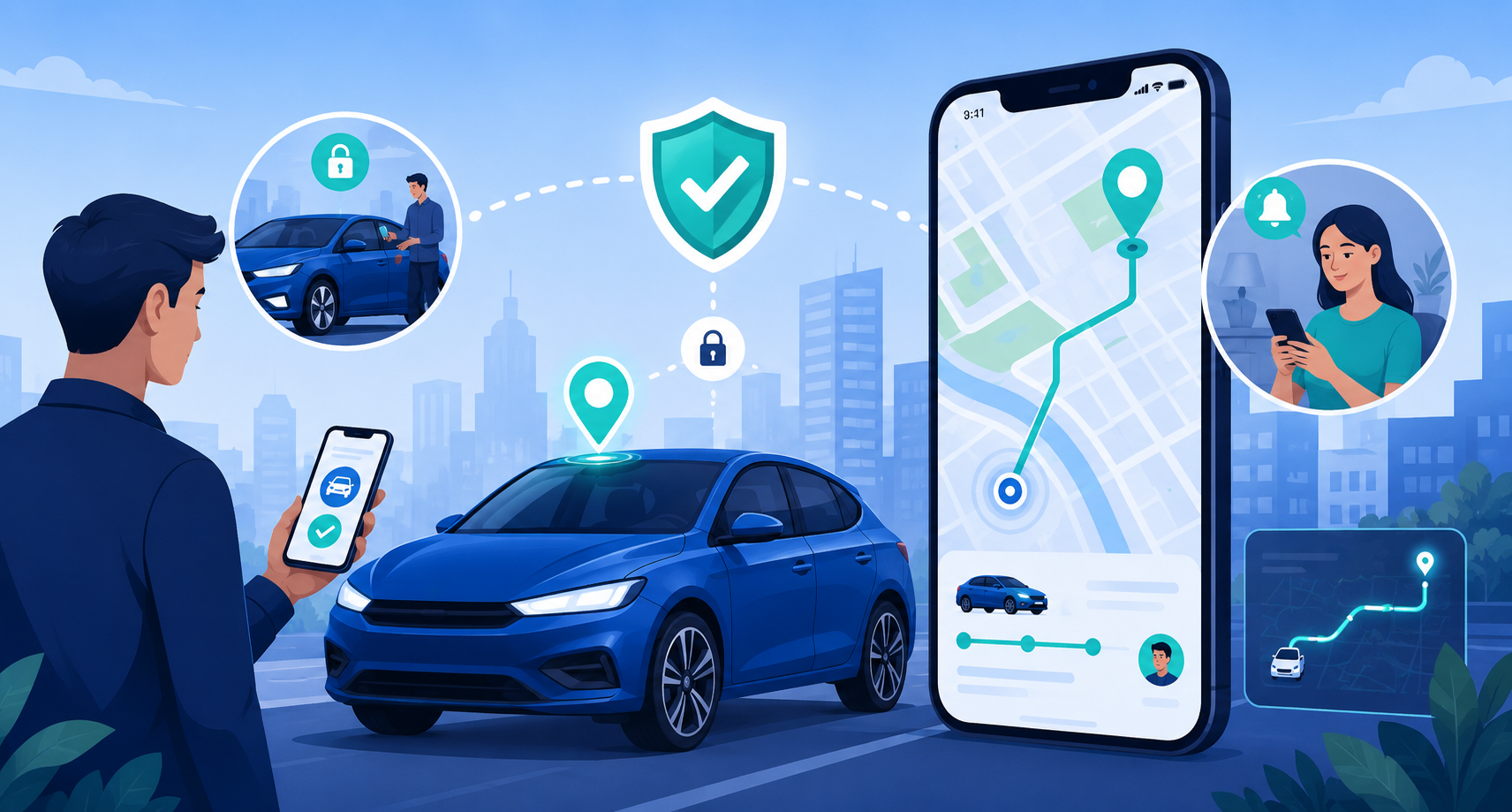
Peer-to-peer car sharing apps are changing how people access vehicles. Instead of renting from a traditional rental counter, users can book cars directly from private vehicle owners through a digital platform. This model gives renters more flexibility and allows car owners to earn from underused vehicles.
But the same flexibility also creates safety and trust challenges. Vehicle owners want to know where their car is during a trip. Renters want a safe and transparent booking experience. Platform admins need visibility into trip activity, late returns, suspicious movement, and dispute situations.
This is where GPS tracking becomes one of the most important safety features in a peer-to-peer car sharing app.
GPS tracking helps car sharing platforms monitor vehicle location, verify pickup and drop-off, detect unusual movement, support emergency response, reduce disputes, and build stronger trust between renters and owners. For founders planning to build a Turo-style marketplace, GPS tracking is not just a technical add-on. It is a core safety and operations layer.
If you are building a car rental marketplace similar to Turo, explore how a ready-made Turo Clone App can support booking, vehicle management, user workflows, payment integration, and security-focused platform features.
Why Safety Matters in Peer-to-Peer Car Sharing Apps
A peer-to-peer car sharing platform connects private vehicle owners with renters. Unlike traditional rental companies, the platform does not always own the vehicles listed on the marketplace. This creates a different type of responsibility.
The platform must protect:
-
Vehicle owners who list their cars
-
Renters who book vehicles
-
Vehicle location and trip records
-
Payment and deposit workflows
-
Pickup and drop-off accuracy
-
Damage and late return disputes
-
Admin visibility and operational control
Without strong safety layers, owners may hesitate to list their vehicles, and renters may not trust the platform enough to complete bookings.
GPS tracking helps solve this trust gap. It gives the platform a clear view of where a vehicle is during an active rental period and creates a reliable location record for trip-related decisions.
What Is GPS Tracking in a Car Sharing App?
GPS tracking in a car sharing app allows the platform to monitor a vehicle’s location using GPS-enabled devices, mobile app data, telematics hardware, or connected vehicle systems.
In a basic setup, location tracking may depend on the renter’s mobile device during pickup or drop-off. In a more advanced setup, the vehicle may have a GPS device or telematics system that sends real-time location data to the platform.
A GPS tracking system can help identify:
-
Where the vehicle is located
-
When the vehicle was picked up
-
Whether the vehicle reached the approved drop-off location
-
Whether the vehicle is moving outside allowed zones
-
Whether the renter returned the car on time
-
Whether the vehicle may require recovery support
For peer-to-peer car sharing apps, GPS tracking improves both safety and operational control.
How GPS Tracking Improves Safety in Peer-to-Peer Car Sharing Apps
GPS tracking supports safety at different stages of the rental journey. It helps before the trip, during the trip, and after the trip ends.
1. Verifies Pickup Location
Pickup accuracy is important in a car sharing marketplace. A renter needs to find the vehicle, and the owner needs confirmation that the trip has started from the correct location.
GPS tracking helps verify whether the renter is near the assigned pickup point. This reduces confusion and prevents false trip-start claims.
For example, if a renter says they could not find the vehicle, location data can help the platform check whether the renter reached the correct pickup zone. If a trip starts unexpectedly from a different location, the system can flag it for review.
This improves safety because both the renter and owner get a more transparent pickup process.
2. Confirms Drop-Off Location
Drop-off verification is equally important. In a peer-to-peer car sharing app, renters may return vehicles to different locations depending on platform rules, owner preferences, or booking type.
GPS tracking helps confirm whether the vehicle was returned to the agreed location.
This is useful for:
-
Home-based vehicle returns
-
Airport rental returns
-
City parking zones
-
One-way drop-off models
-
Owner-approved pickup and return points
If the vehicle is dropped off at the wrong location, the platform can notify the renter, owner, or support team. This reduces the risk of lost vehicles, owner inconvenience, and post-trip disputes.
3. Helps Detect Late Returns
Late returns can create serious problems in car sharing marketplaces. One delayed trip can affect the next booking, frustrate the vehicle owner, and damage platform trust.
GPS tracking helps admins monitor whether the vehicle is still away after the scheduled return time. If the car has not reached the drop-off location, the platform can trigger alerts.
A strong late return workflow may include:
-
Automatic renter reminder
-
Owner notification
-
Admin alert
-
Late fee calculation
-
Trip extension option
-
Support escalation if the vehicle is not returned
This helps the platform act faster instead of waiting for the owner to complain manually.
4. Reduces Vehicle Misuse
Vehicle owners may worry that renters will use their cars outside agreed rules. For example, a renter may take the car outside a permitted area, drive to restricted regions, or use it for unauthorized purposes.
GPS tracking helps reduce this risk by giving the platform visibility into trip movement.
The platform can monitor:
-
Vehicle location during active trips
-
Movement outside approved service zones
-
Unusual route patterns
-
Unauthorized cross-city movement
-
Suspicious long stops
-
Vehicle movement after trip completion
This does not mean the platform should invade renter privacy. Location tracking should be clearly explained and limited to active rental periods. But within those rules, GPS tracking can protect owners and improve accountability.
5. Supports Geofencing Safety Rules
Geofencing is one of the most useful safety applications of GPS tracking. It allows the platform to create virtual boundaries around specific areas.
For example, a platform can create geofences around:
-
Pickup locations
-
Drop-off zones
-
Airport parking areas
-
City service areas
-
Restricted regions
-
Premium vehicle operating zones
-
Cross-border travel limits
If a vehicle enters or leaves a geofenced area, the system can trigger an alert.
This is especially useful for premium cars, electric vehicles, fleet-based rentals, airport rentals, and city-based car sharing platforms.
For founders, geofencing can become a strong safety and control feature inside a Turo-style car sharing marketplace.
6. Improves Emergency Response
In some situations, GPS tracking can help the platform respond faster to emergencies. If a renter reports an issue, accident, breakdown, or vehicle problem, the support team can use location data to understand where help is needed.
GPS tracking can support:
-
Roadside assistance coordination
-
Accident location identification
-
Vehicle recovery support
-
Emergency support routing
-
Owner notification
-
Admin investigation
This improves the platform’s ability to support users during real-world problems.
For a mobility marketplace, fast response can protect both user safety and brand reputation.
7. Helps Recover Vehicles
Vehicle recovery is one of the strongest business reasons for GPS tracking in peer-to-peer car sharing apps.
If a vehicle is not returned, moved outside an approved area, or suspected to be misused, GPS tracking gives the platform a starting point for recovery action.
This can help with:
-
Locating the vehicle
-
Notifying the owner
-
Escalating to support
-
Coordinating with local authorities if required
-
Preserving location history for investigation
-
Reducing potential financial loss
Without location visibility, vehicle recovery becomes slower and more difficult. This is one reason many vehicle owners prefer platforms that provide tracking, trip records, and safety controls.
8. Reduces Owner Anxiety
For a peer-to-peer car sharing platform to grow, vehicle owners must feel confident enough to list their cars.
Many owners hesitate because they worry about:
-
Where the car will go
-
Whether it will be returned on time
-
Whether it will be misused
-
Whether they can prove a problem occurred
-
Whether the platform can support them during disputes
GPS tracking reduces this anxiety by giving owners and admins better visibility into vehicle movement. Even if owners do not see every live detail, knowing that the platform has tracking and trip records creates trust.
This can improve vehicle supply, which is critical for marketplace growth.
9. Creates Better Trip Records
Trip records are important for operational transparency. A strong P2P car sharing app should maintain clear records for each rental.
GPS tracking can help create trip records that include:
-
Pickup location
-
Drop-off location
-
Start time
-
End time
-
Route movement summary
-
Late return status
-
Zone violation alerts
-
Distance travelled
-
Location-based event history
These records help the platform make better decisions during disputes, support cases, insurance reviews, and admin investigations.
10. Supports Damage and Dispute Resolution
Disputes are common in rental marketplaces. A renter may say they returned the vehicle on time. An owner may claim the car was taken outside an approved zone. A damage claim may depend on where or when the vehicle was used.
GPS tracking cannot solve every dispute, but it can provide useful supporting evidence.
It can help answer questions such as:
-
Was the vehicle picked up from the correct location?
-
Was it returned to the approved drop-off point?
-
Was the car used outside allowed areas?
-
Was the vehicle still moving after the trip ended?
-
Was the renter late?
-
Did the vehicle stop at a suspicious location?
When combined with photos, odometer readings, payment records, and booking logs, GPS tracking creates a stronger evidence base.
For a complete view of broader platform safety, you can also read our blog on Key Security Integrations for Peer-to-Peer Car Sharing Apps in 2026.
11. Improves Admin Control
Admins need strong visibility to manage a car sharing marketplace. Without location data, the support team may depend only on user messages, manual complaints, and delayed reports.
GPS tracking gives admins better control over active trips.
Admin teams can use GPS data to:
-
Track ongoing rentals
-
Review late returns
-
Monitor high-risk bookings
-
Identify zone violations
-
Support emergency cases
-
Verify trip completion
-
Investigate disputes
-
Take faster operational action
This makes the platform easier to manage as bookings increase.
12. Helps Build Trust Scores and Risk Profiles
Advanced peer-to-peer car sharing platforms can use GPS tracking data as part of a broader trust and safety system.
For example, the platform may evaluate:
-
Whether renters return vehicles on time
-
Whether they follow approved routes or zones
-
Whether they repeatedly trigger alerts
-
Whether they have clean trip histories
-
Whether they have dispute patterns
This data can support trust scores, risk flags, admin reviews, or booking approval rules.
The goal is not to punish users unfairly. The goal is to identify risk patterns and protect the marketplace before problems become expensive.
GPS Tracking vs Telematics: What Is the Difference?
GPS tracking and telematics are related, but they are not the same.
GPS tracking mainly focuses on location. It helps identify where the vehicle is and how it moves.
Telematics provides deeper vehicle data. It can include mileage, speed, diagnostics, fuel level, battery status, lock status, driving behavior, and vehicle health.
|
Feature |
GPS Tracking |
Telematics |
|
Main Purpose |
Location visibility |
Vehicle data and usage insights |
|
Tracks Vehicle Location |
Yes |
Yes |
|
Tracks Mileage |
Basic or estimated |
More accurate |
|
Tracks Fuel/Battery |
No |
Yes, if supported |
|
Supports Geofencing |
Yes |
Yes |
|
Supports Vehicle Health |
No |
Yes |
|
Best For |
Safety and location monitoring |
Advanced fleet and usage management |
For a basic peer-to-peer car sharing app, GPS tracking may be enough at launch. For premium platforms, EV rentals, fleet-based models, and enterprise mobility businesses, telematics can provide stronger operational intelligence.
Key GPS Tracking Features a P2P Car Sharing App Should Have
A car sharing app does not need to show every location feature to every user. But the backend should support strong location-based workflows.
Important GPS tracking features include:
-
Real-time vehicle location during active trips
-
Pickup and drop-off verification
-
Trip start and trip end location logs
-
Late return alerts
-
Geofencing rules
-
Route history summary
-
Admin tracking dashboard
-
Owner notification controls
-
Location-based dispute records
-
Emergency support location access
-
Vehicle recovery support
-
Privacy and consent settings
These features help balance safety, transparency, and user privacy.
Privacy Considerations for GPS Tracking
GPS tracking improves safety, but it must be handled responsibly. Users should clearly understand when tracking happens, why it happens, and how the data is used.
A good car sharing platform should follow privacy-friendly practices such as:
-
Tracking only during active trips
-
Showing clear consent terms
-
Limiting access to sensitive location data
-
Giving admins role-based access
-
Storing location history securely
-
Avoiding unnecessary tracking after trip completion
-
Explaining tracking in the privacy policy
-
Following regional data protection rules
This helps the platform build trust without making renters feel uncomfortable.
Common GPS Tracking Mistakes Founders Should Avoid
Many founders add GPS tracking but do not connect it properly to business operations. This limits its value.
Common mistakes include:
-
Tracking location without clear user consent
-
Not connecting GPS data with booking records
-
Not setting late return alerts
-
Not using geofencing for restricted zones
-
Giving too much location access to internal teams
-
Not storing trip history securely
-
Relying only on mobile GPS without backup options
-
Not preparing dispute workflows around location data
-
Not explaining GPS tracking to vehicle owners and renters
GPS tracking should be designed as part of the platform’s safety system, not just as a map feature.
How GPS Tracking Supports Marketplace Growth
GPS tracking does more than improve safety. It also supports business growth.
A platform with strong tracking and safety features can attract more vehicle owners because they feel protected. It can also improve renter trust because the booking process feels transparent and professional.
GPS tracking can support growth by improving:
-
Owner confidence
-
Vehicle supply
-
Renter trust
-
Booking completion
-
Dispute resolution
-
Admin efficiency
-
Platform reputation
-
Insurance readiness
-
Investor confidence
In a marketplace business, trust directly affects supply, demand, and revenue. GPS tracking helps strengthen that trust.
How Miracuves Helps Build GPS-Enabled Car Sharing Platforms
Building a peer-to-peer car sharing app requires more than a simple listing and booking system. Founders need renter onboarding, owner dashboards, vehicle management, payment workflows, admin controls, dispute handling, and safety features that support real-world rental operations.
Miracuves helps founders build white-label car sharing platforms and Turo-style marketplaces with practical, scalable, and customizable product foundations. For founders planning to launch a peer-to-peer car sharing platform, Miracuves can support important mobility features such as booking flows, vehicle availability, payment gateway integration, admin dashboards, user verification, dispute workflows, GPS tracking integration readiness, and future expansion options.
A Miracuves-built car sharing platform can support:
-
Renter and owner onboarding
-
Vehicle listing and approval workflows
-
Booking and availability management
-
Secure payment integration
-
Commission and payout workflows
-
Admin dashboard
-
Trip records
-
GPS tracking integration support
-
Geofencing logic
-
Dispute management
-
Notification workflows
-
White-label branding
-
Source-code ownership
-
Custom feature expansion
This gives founders a faster path to launch while still keeping flexibility for security, tracking, and operational customization.
When Should a Founder Add GPS Tracking?
The right time to add GPS tracking depends on the platform model.
For a small local launch, basic GPS-assisted pickup and drop-off verification may be enough. For a premium or multi-city platform, real-time GPS tracking and geofencing should be planned early.
Founders should prioritize GPS tracking when:
-
Private vehicle owners are listing cars
-
The platform supports contactless pickup
-
Vehicles are high-value
-
Long-distance trips are allowed
-
Airport rentals are offered
-
Late returns are common
-
The platform wants stronger dispute evidence
-
Admins need real-time trip visibility
-
Insurance partners require trip records
If vehicle owner trust is a major challenge, GPS tracking should be considered a core launch feature.
Conclusion
GPS tracking plays a major role in improving safety in peer-to-peer car sharing apps. It helps verify pickup and drop-off, monitor active trips, detect late returns, support geofencing, reduce vehicle misuse, improve emergency response, and create better evidence for disputes.
For renters, GPS tracking creates a more transparent booking experience. For vehicle owners, it increases confidence before listing a car. For platform admins, it improves operational control and faster decision-making.
As peer-to-peer mobility platforms continue to grow in 2026, GPS tracking will remain one of the most important safety layers for Turo-style car sharing marketplaces.
Founders planning to build a safer and more scalable car sharing platform can use GPS tracking as part of a broader trust system that includes identity verification, driver license checks, secure payments, deposits, admin controls, dispute workflows, and platform monitoring.
To build a secure, GPS-ready car sharing platform, explore the Miracuves Turo Clone App and learn more about the key security integrations for peer-to-peer car sharing apps.
- הפינה המשפטית
- ביטחון, אבטחה ומודיעין
- אבטחת אישים
- אבטחת מידע וסייבר
- רישוי עסקים
- אירועים תחת כיפת השמיים
- אבטחת מתקנים ואתרים
- מעברי גבול ו תעופה
- בתי ספר להכשרת ומכללות ביטחון
- כלי ירייה מטויחים וחנויות נשק
- אבטחה בתחבורה
- מנב"טים קב"טים קמעונאיים
- אחר
- הגנת הפרטיות
- מודיעין עסקי וארגוני
- פרשנות
- סיקורים
- רחפנים
- גילוי דעת
- כתבות
- מיומנו של קב"ט / מנב"ט

 Hebrew