

The Role of Nutrition in Women's Hormonal and Reproductive Health
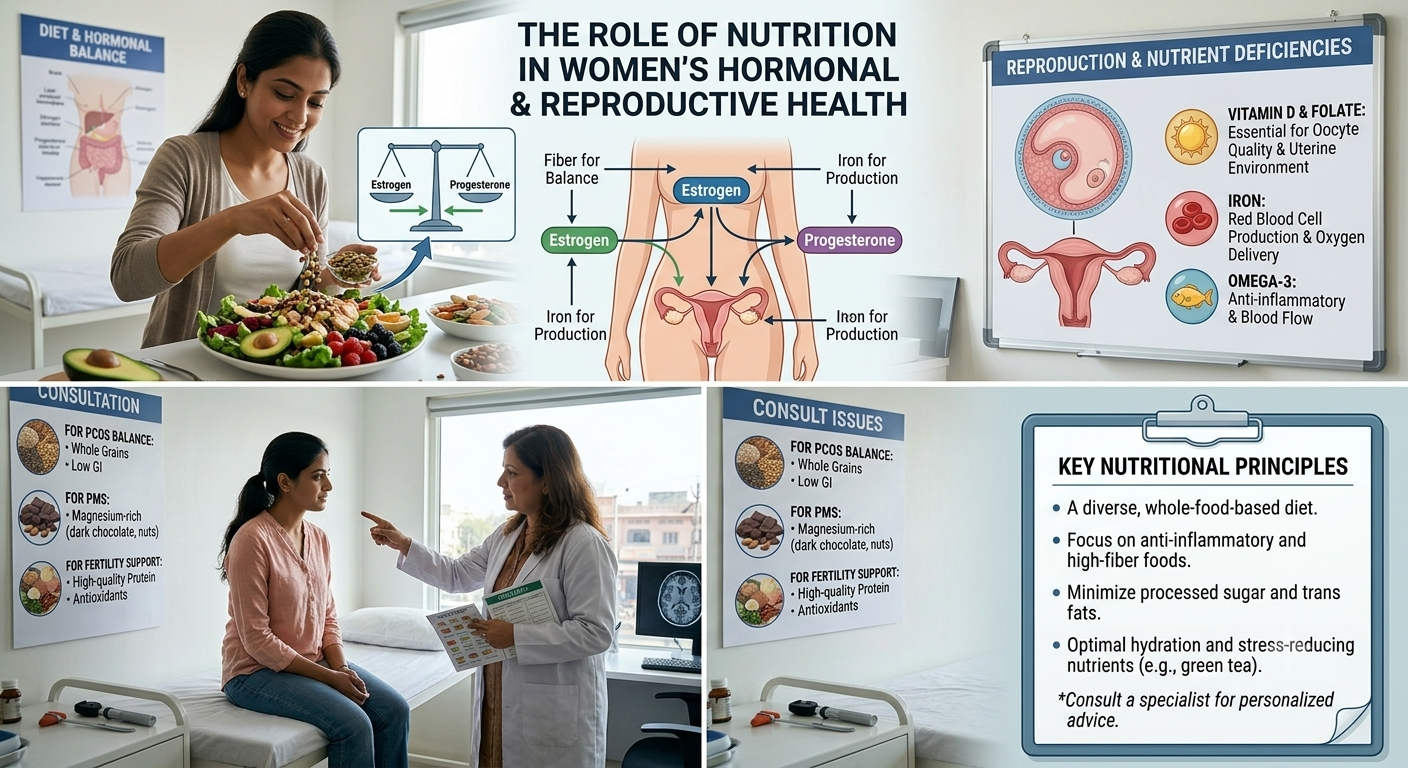
Let me start with something that still surprises me after all these years. Most women I speak to understand that nutrition matters for their overall health. But very few realise just how deeply it affects their hormones, their menstrual cycles, and their fertility.
We spend so much time worrying about what we eat for weight or energy. We rarely stop to think about how our food choices are shaping our reproductive health, month after month, year after year.
Here’s the reality. Nutrition in your reproductive years, it matters more than just your immediate health, it reaches into your fertility too, your pregnancy outcomes and, the long run well being . What you put on your plate affects your hormonal regulation, your ovulatory function, and your capacity to conceive.
The link isn’t subtle, no it’s really profound. And once you get it, it could be the difference between dealing with nagging symptoms, all the time, and then finally feeling like your body is cooperating with you , not pushing back .
Your Body's Non-Negotiable Needs
Let’s talk about the basics first. Your body needs a certain range of nutrients, so that your hormones stay in balance and your reproductive system keeps working , more or less how it should.
Eating balanced and varied diets with whole foods, and with as little processing as possible can help with hormone regulation, the normal ovulatory process, and also supports a healthy gestation. The main nutrients that tend to matter most for women of reproductive age are iron, folate, calcium, vitamin D, zinc, vitamin B12, and long chain omega-3 fatty acids, like DHA.
But when those nutrients are missing , it is where things start to shift. Those deficiencies have been linked with weakened ovarian function, disrupted menstrual cycles, and a higher chance of pregnancy complications, overall.
Here's what surprises many women. Even in India, where we have such a rich culinary tradition, micronutrient deficiencies remain highly prevalent among women of reproductive age. Iron deficiency anaemia affects over 50 percent of women in this group. Folate and vitamin B12 deficiencies are also substantial public health concerns.
We're not eating badly. We're just not eating what our bodies actually need during this critical phase of life.
The Mediterranean Diet: Why It Keeps Coming Up
If there's one dietary pattern that consistently emerges in the research, it's the Mediterranean diet. And for good reason.
There’s evidence that keeps coming back, linking a Mediterranean-style way of eating to better metabolic health . It seems to boost insulin sensitivity, supports IVF success, lowers the risk of gestational diabetes, and also improves neonatal outcomes in a more favourable direction. The whole pattern, with lots of fruits, vegetables, whole grains, and healthy fats like olive oil , plus fish, gives you anti-inflammatory nutrients, fibre, and antioxidant compounds that help with hormonal steadiness, sort of like a quiet balancing act.
When it comes to women with PCOS, the Mediterranean diet has shown some real promise for insulin sensitivity and hormonal balance. For women dealing with endometriosis, this eating approach has been tied to less pain ,and an improved day-to-day quality of life. And if someone is trying to conceive, sticking closer to this same dietary pattern has been linked to a better chance of conception.
The pattern itself matters more than any single food. It's the combination—plant-based proteins, healthy fats, fibre-rich carbohydrates, and minimal processed foods—that creates the benefit.
PCOS: When Insulin Resistance Affects Hormones
Polycystic ovary syndrome is one of the most common endocrine disorders affecting reproductive-aged women, impacting anywhere from 6 to 20 percent of women globally. It’s characterised by hormonal imbalances, that can end up throwing ovulation off track, triggering irregular periods , and yes also making conception kinda hard.
This is where nutrition really turns into a powerful tool. In practice, lifestyle changes are usually suggested as the first step in managing PCOS. Dietary strategies like low glycemic index foods, high-fibre diets, omega 3 rich meals, and anti inflammatory eating patterns can help improve insulin sensitivity and get hormonal balance back to a steadier rhythm.
Also, even a modest weight loss of about 5 to 10 percent, when paired with those nutrition changes, can make a big difference in outcomes. None of this is about extreme diets or deprivation. It’s more about picking foods that harmonise with your body rather than fighting it, day after day.
Endometriosis: Fighting Inflammation Through Food
Endometriosis affects roughly ten percent of women in reproductive age, and it can bring pelvic pain, trouble with fertility, and a lower day to day quality of life. In general, conventional care tends to lean on hormonal therapy or surgery, but food choices are slowly becoming a real support like, not a replacement, more of a partner in treatment.
The Mediterranean style of eating, with its anti-inflammatory nutrients, plenty of fibre, and antioxidant rich foods, has been linked to less pain and better overall wellbeing in women living with endometriosis. Also omega-3 fatty acids, which are known for dampening inflammation, may help with symptom control in some people.
An anti-inflammatory eating plan usually leans on fresh vegetables , fruits, seeds, nuts, whole grains, plus lean protein and other healthy fats, while removing highly processed items, trans fats, and refined sugars. A fair number of women with endometriosis mention that small dietary changes help them handle their symptoms, even if the results vary a bit person to person .
Thyroid Health: The Hormone Regulator
The thyroid gland somehow plays a crucial role in regulating metabolism and various bodily functions, it’s kinda never-ending. Women in particular are more likely to run into thyroid disorders such as hypothyroidism, or Hashimoto’s disease
There are a few nutrients that matter a lot for thyroid health too. Iodine, selenium, iron, folate, vitamin D, and omega-3 fatty acids all back up hormone production, and also immune function. Iodine-rich foods like fish ,and seaweed, along with selenium from chicken and eggs are especially important
Still, there are big gaps in dietary knowledge among women dealing with thyroid disorders. That suggests there is a real need for better education on how nutrition really helps with managing these conditions and symptoms
Fertility: Preparing Your Body for Conception
For women who are trying to conceive, preconception nutrition is a key, changeable risk factor, kind of the big lever. Female fertility can be supported by a diet that has more plant-based protein, dietary fibre , omega-3 fatty acids, vitamins, and minerals. Foods that are rich in omega-3s may help improve egg quality, and protein from plants can lower the risk of infertility, a bit in a hopeful but also evidence based way.
Micronutrients do a lot for reproductive well-being. They help with oocyte quality, hormonal balance, and implantation processes. In particular, folate, vitamin D, iron, and selenium seem very important, no surprise there.
Still, many women don’t manage to hit the best nutritional intake during this sensitive time. Preconception dietary habits influence body weight, metabolic health, and also the likelihood of getting pregnant. And the evidence is pretty clear: what you eat before pregnancy matters nearly as much as what you eat once you’re already pregnant.
A Final Word
So here’s what I’d take from all of this. Nutrition isn’t only about weight, or energy, it’s really about giving your body the right resources so it can regulate hormones , help you ovulate consistently, and also support a healthy pregnancy, not just “get through it”.
If you’re dealing with irregular periods , hormonal signals that feel off , or trouble conceiving , don’t just brush it off. And try not to think medication by itself is automatically the solution. Nutrition is a strong, research-supported approach that can help your reproductive health the whole way through, every phase.
Every woman's body is different. What works for one person may not work for another. That's why personalised guidance matters. If you're in Delhi and have concerns about your hormonal or reproductive health, you can consult a gynecologist in south Delhi who can evaluate your specific situation and recommend appropriate dietary and medical interventions. Many women find it helpful to book an appointment with best gynecologist in south Delhi who can provide both clinical expertise and a supportive environment for discussing these deeply personal concerns.
Your hormones affect everything: your mood, your energy, your cycle, your fertility. And what you eat affects your hormones. It's that simple, and that powerful.
- הפינה המשפטית
- ביטחון, אבטחה ומודיעין
- אבטחת אישים
- אבטחת מידע וסייבר
- רישוי עסקים
- אירועים תחת כיפת השמיים
- אבטחת מתקנים ואתרים
- מעברי גבול ו תעופה
- בתי ספר להכשרת ומכללות ביטחון
- כלי ירייה מטויחים וחנויות נשק
- אבטחה בתחבורה
- מנב"טים קב"טים קמעונאיים
- אחר
- הגנת הפרטיות
- מודיעין עסקי וארגוני
- פרשנות
- סיקורים
- רחפנים
- גילוי דעת
- כתבות
- מיומנו של קב"ט / מנב"ט
 English