

SOC Security Services or MSSP? The Confusing Choice Indian IT Leaders Face
Why ICT Leaders Struggle to Tell SOC Security Services and an MSSP Apart
When ICT companies start researching cybersecurity partners, they quickly run into two overlapping terms: SOC security services and MSSP (Managed Security Service Provider). Vendors often use these terms loosely, sometimes interchangeably, which makes it genuinely confusing to know what you're actually signing up for. Understanding the real difference between SOC security services and an MSSP matters because it directly affects the depth of monitoring, the speed of incident response, and how much ongoing analysis your organization actually receives for its investment.
Why This Distinction Matters for ICT Businesses
ICT companies typically manage a mix of internal infrastructure, client environments, and cloud platforms, all of which need consistent security oversight. Choosing a partner based on the wrong assumption — expecting deep, continuous threat analysis when the service is actually closer to basic security product management — can leave meaningful monitoring gaps. Given how quickly threats move through interconnected ICT environments, this mismatch can be costly to discover only after an incident occurs.
Where the Confusion Typically Comes From
The term MSSP originally described providers focused on managing and maintaining security tools — firewalls, antivirus platforms, intrusion prevention systems — largely from an operational standpoint. Over time, many MSSPs expanded into monitoring and alerting, which is part of why the lines with SOC security services have blurred. These services, by contrast, are built specifically around continuous threat detection, correlation, and active incident response, rather than primarily maintaining and managing security infrastructure.
How SOC Security Services Differ From an MSSP in Practice
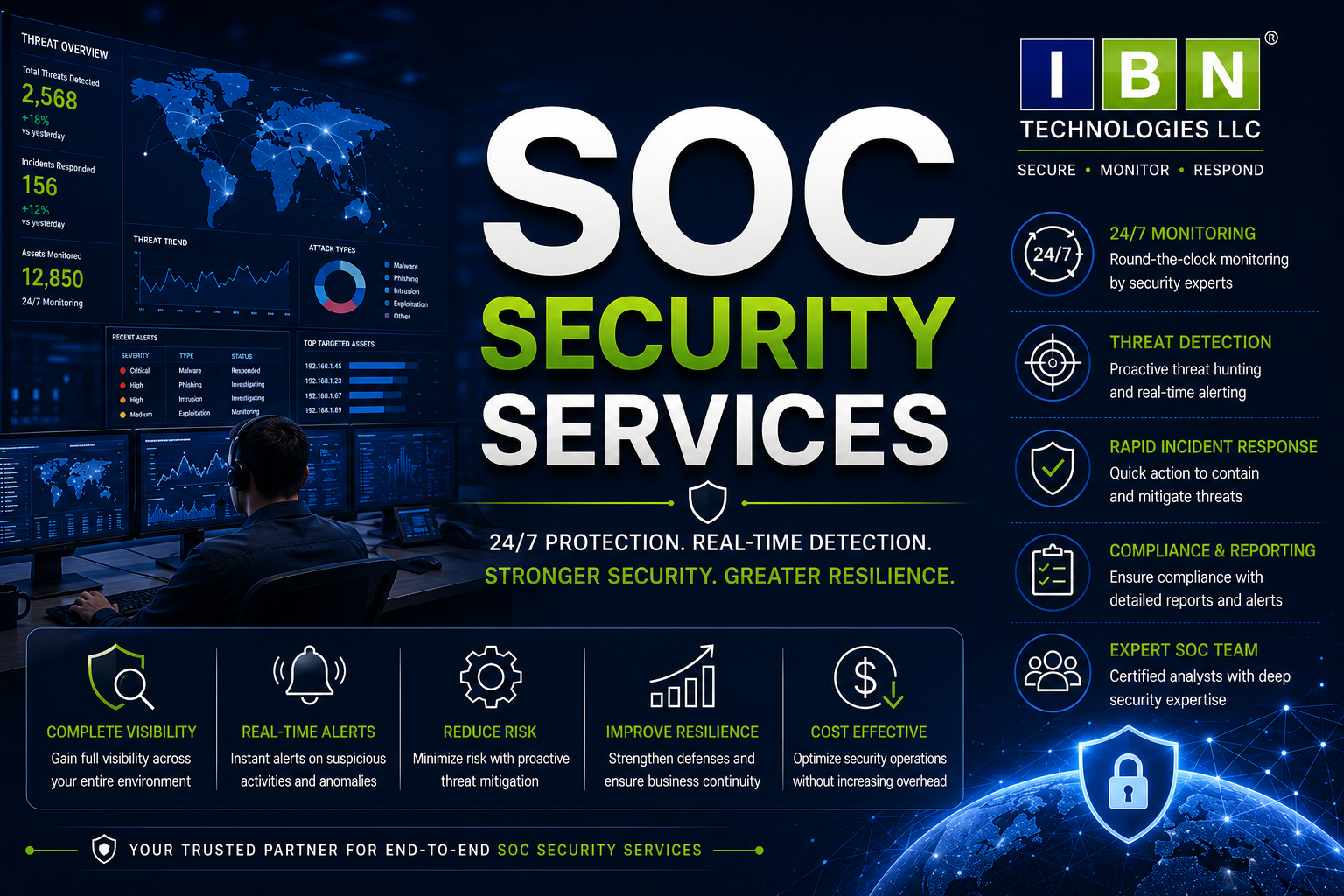
A traditional MSSP often focuses on keeping security tools operational, applying updates, and generating alerts based on predefined rules. SOC security services go further by actively correlating data across multiple sources, applying behavioral analytics and threat intelligence, and having trained analysts investigate and respond to incidents in real time. IBN Technologies structures its offering around this deeper model, combining SIEM as a Service for centralized log correlation with SOC as a Service for continuous, analyst-led monitoring and incident containment — going beyond simple tool management into active threat response.
SOC Security Services vs. MSSP: A Side-by-Side Comparison
|
Factor |
Traditional MSSP |
SOC Security Services |
|
Primary Focus |
Managing and maintaining security tools |
Continuous threat detection and response |
|
Alert Handling |
Often rule-based, limited correlation |
Behavioral analytics with expert correlation |
|
Incident Response |
May notify but not actively contain threats |
Active investigation and containment |
|
Analyst Involvement |
Varies, sometimes minimal |
Continuous, analyst-led monitoring |
|
Reporting Depth |
Tool status and basic alert logs |
Correlated incident reporting and dashboards |
How to Determine Which Model Your ICT Business Actually Needs
If your organization mainly needs help keeping existing security tools updated and operational, a traditional MSSP arrangement might suffice for basic needs. However, if your business requires active threat hunting, real-time correlation across multiple systems, and a team that investigates and responds to incidents as they happen, SOC security services are built specifically for that purpose. Many ICT companies find that as their infrastructure and client obligations grow, MSSP-level tool management alone no longer provides sufficient visibility.
Benefits of Choosing Based on Actual Need, Not Terminology
Selecting a provider based on what your ICT business genuinely requires — rather than which term sounds more comprehensive — leads to better-matched service levels, clearer expectations around response times, and monitoring that actually correlates activity across your environment instead of treating each tool in isolation.
Industry Use Case: Recognizing a Coverage Gap
An ICT company previously working with a traditional MSSP for firewall and antivirus management realized during a security review that incidents were being flagged but not actively investigated or contained by the provider. After comparing this against SOC security services offering continuous analyst-led monitoring and correlation, the company transitioned to a model built around active detection and response rather than tool maintenance alone.
Best Practices When Comparing These Models
Ask any prospective provider directly whether their service is centered on tool management or active threat detection and response. Request examples of how an actual incident would be investigated and escalated under their model. Clarify whether correlation across multiple systems is included, or whether each security tool is monitored in isolation. Compare reporting samples to see whether you receive raw alerts or genuinely correlated incident insights.
Compliance Context
Regulatory frameworks increasingly expect organizations to demonstrate active threat detection and response capability, not just tool maintenance. ICT companies working under compliance obligations tied to client contracts or industry standards should confirm that their chosen model — whether MSSP or SOC security services — genuinely supports the level of monitoring and reporting these frameworks require.
Understanding the real difference between an MSSP and soc security services helps ICT leaders choose a partner based on actual security needs rather than overlapping terminology, ensuring the monitoring depth received actually matches what the business requires.
- הפינה המשפטית
- ביטחון, אבטחה ומודיעין
- אבטחת אישים
- אבטחת מידע וסייבר
- רישוי עסקים
- אירועים תחת כיפת השמיים
- אבטחת מתקנים ואתרים
- מעברי גבול ו תעופה
- בתי ספר להכשרת ומכללות ביטחון
- כלי ירייה מטויחים וחנויות נשק
- אבטחה בתחבורה
- מנב"טים קב"טים קמעונאיים
- אחר
- הגנת הפרטיות
- מודיעין עסקי וארגוני
- פרשנות
- סיקורים
- רחפנים
- גילוי דעת
- כתבות
- מיומנו של קב"ט / מנב"ט

 Hebrew