

Advanced Optical Performance: Exploring the Technology Behind Holographic Sights
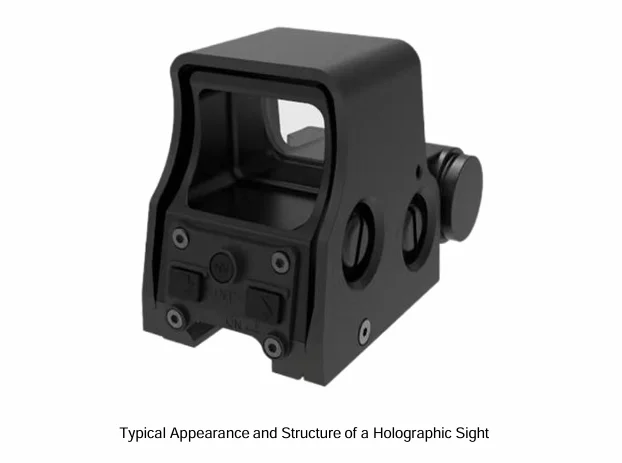
Optical technology continues to evolve through the integration of precision engineering, laser imaging, and sophisticated electronic controls. Among these developments, the Holographic sight represents an innovative approach to reticle projection, creating a virtual aiming image through holographic diffraction technology.
Unlike conventional optical systems that depend primarily on reflected illumination, holographic technology uses a laser source and specially designed optical components to reconstruct a reticle image perceived at optical infinity. This design is intended to provide a clear, intuitive viewing experience while supporting rapid visual alignment.
Understanding Holographic Imaging
At the center of a holographic sight is a holographic film or grating containing recorded light-wave information. A laser diode generates coherent light, which is directed through the optical system. A collimating mirror converts the beam into parallel light before it reaches the holographic grating. Diffraction then directs the reconstructed reticle toward the viewer.
This combination of laser emission, beam collimation, diffraction, and image reconstruction makes holographic sights a fascinating example of applied optical engineering. The reticle can be perceived as a virtual image at infinity, allowing the optical system to function without requiring the same traditional alignment approach associated with mechanical sights.
Precision Components Working Together
Performance depends on the interaction of multiple components rather than a single optical element. The laser diode provides the light source, while the holographic grating manages diffraction. A collimating mirror helps establish the required optical path, and the holographic reticle produces the visible aiming pattern.
Electronics also play an important role. Brightness management, power control, automatic shutdown, battery monitoring, and shake-awake functionality can contribute to convenient operation. ARVR Optical's published specifications include 20 daylight-visible brightness positions, 10 night-visible positions, a CR123A battery, and a stated maximum battery life of at least 1,000 hours at middle brightness.
Built for Demanding Conditions
Modern optical products must account for more than image quality. Environmental durability, temperature tolerance, impact resistance, and resistance to dust and water can be important considerations when evaluating an optical device.
The published specifications for ARVR Optical's system include an operating temperature range from -40°C to +55°C, storage temperatures from -45°C to +60°C, an IP67 protection rating, and stated impact resistance of 1000G. The housing is manufactured from aluminum using CNC processing and black oxidation surface treatment.
These characteristics demonstrate how contemporary optical engineering combines imaging performance with mechanical and environmental design.
Technical Flexibility and Customization
One advantage of working with an optical technology manufacturer is access to more than complete products. ARVR Optical states that it also provides optical components including holographic gratings and holographic reticle plates, while supporting customized optical solution development.
This approach can be valuable for organizations researching specialized optical systems or developing products with particular technical requirements. Instead of treating the sight as a single finished device, engineers can consider the individual optical and electronic elements that determine overall performance.
The Future of Precision Optical Systems
Holographic imaging demonstrates how laser technology, diffraction principles, precision manufacturing, and electronics can be combined within a compact optical platform. As these technologies continue to develop, improvements in materials, optical coatings, electronics, and manufacturing processes may create further opportunities for advanced display and sighting systems.
For businesses and technology professionals exploring modern optical solutions, understanding the underlying engineering can make product evaluation more meaningful. Specifications such as optical configuration, reticle design, brightness control, environmental protection, adjustment capability, and component quality provide useful benchmarks for comparing solutions.
With its focus on Holographic sight imaging and optical manufacturing, ARVR Optical illustrates how specialized engineering can bring advanced optical concepts into practical product designs.
- הפינה המשפטית
- ביטחון, אבטחה ומודיעין
- אבטחת אישים
- אבטחת מידע וסייבר
- רישוי עסקים
- אירועים תחת כיפת השמיים
- אבטחת מתקנים ואתרים
- מעברי גבול ו תעופה
- בתי ספר להכשרת ומכללות ביטחון
- כלי ירייה מטויחים וחנויות נשק
- אבטחה בתחבורה
- מנב"טים קב"טים קמעונאיים
- אחר
- הגנת הפרטיות
- מודיעין עסקי וארגוני
- פרשנות
- סיקורים
- רחפנים
- גילוי דעת
- כתבות
- מיומנו של קב"ט / מנב"ט

 English