

Projection Nut Welder: Precision, Strength, and Efficiency
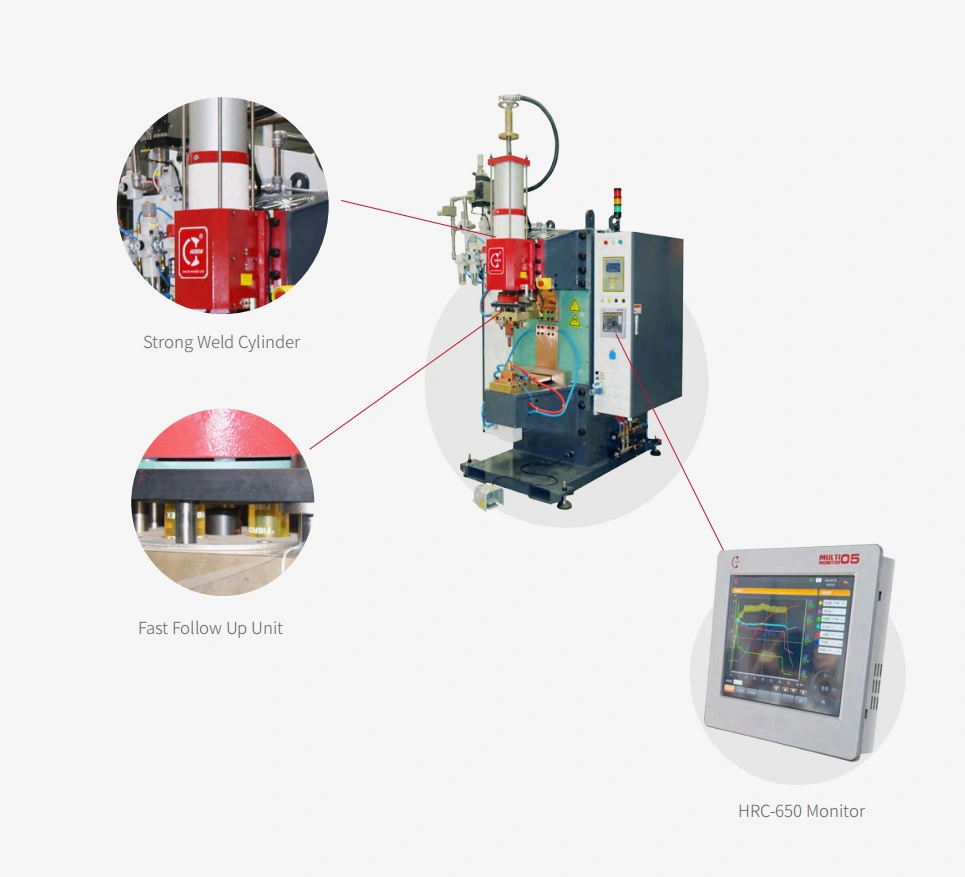
A projection nut welder is an advanced industrial welding solution designed to join nuts, fasteners, and other metal components securely to sheet metal and fabricated parts. It uses the principle of resistance welding, applying controlled electrical current and pressure to create a strong, consistent bond at designated projection points. This process is widely used in automotive manufacturing, metal fabrication, appliance production, and industrial assembly, where reliable fastening and repeatable quality are essential.
Heron Welder offers modern resistance welding solutions designed to support manufacturers seeking improved productivity, dependable weld quality, and efficient production processes. By incorporating a suitable projection nut welder into a manufacturing line, businesses can achieve accurate fastening, consistent results, and a professional standard of finished products.
What Is a Projection Nut Welder?
A projection nut welder is a specialized resistance welding machine that attaches a nut to a metal workpiece through small raised projections on the nut or component. During welding, electrodes apply pressure while an electrical current generates heat at the contact points. The projections concentrate the heat where the joint is required, allowing the nut to bond securely with the base material.
This controlled welding method is particularly useful for applications that require threaded fastening points on sheet metal. Instead of relying entirely on manual fastening methods, manufacturers can integrate projection nut welding into standardized production procedures. Heron Welder provides welding technology for industrial applications where precision, repeatability, and production efficiency are important priorities.
How Does a Projection Nut Welder Work?
The operation of a projection nut welder involves several coordinated steps. First, the operator positions the nut and workpiece correctly between the welding electrodes. The machine then applies the required pressure to hold the components in place. An electrical current passes through the contact area, generating localized heat at the projections.
As the projections soften and collapse under controlled pressure, the metal surfaces form a welded joint. Once the welding cycle is complete, the current stops, and the joint cools under pressure to develop the required strength. Proper control of current, welding time, electrode force, and component positioning helps achieve consistent results.
With an appropriately configured Heron Welder system, manufacturers can establish repeatable welding parameters that support dependable production and help maintain consistent quality across multiple components.
Key Advantages of a Projection Nut Welder
1. Strong and Reliable Welded Joints
One of the main advantages of a projection nut welder is its ability to create secure joints between nuts and metal sheets. The concentrated heat at the projection points supports effective bonding while the electrodes maintain pressure throughout the welding cycle. Correctly selected welding parameters help produce durable fastening points suitable for demanding industrial applications.
2. High Production Efficiency
Manufacturing operations often require large quantities of components with consistent fastening quality. A projection nut welder supports repeatable welding cycles, helping reduce the time required to attach nuts compared with slower manual processes. This makes it a practical choice for production lines where output, consistency, and efficient workflow are essential.
3. Consistent Welding Quality
Maintaining uniform quality is important for manufacturers serving automotive, appliance, and general metalworking industries. A projection nut welder allows key welding parameters to be controlled for specific materials and component designs. When the machine is correctly configured and maintained, it can help minimize variations between welds and support consistent production standards.
4. Accurate Nut Positioning
Correct nut placement is essential when components must align with bolts, screws, and other assembly parts. Projection nut welding provides a controlled method for creating fastening points at designated locations. Suitable fixtures, electrodes, and positioning systems help manufacturers maintain alignment and achieve accurate assembly results.
5. Support for Automated Production
Modern manufacturing increasingly depends on automated and semi-automated equipment. A projection nut welder can be incorporated into production systems that use fixtures, material handling equipment, and automated controls. This integration helps streamline repetitive tasks, improve workflow coordination, and support higher-volume manufacturing requirements.
Industrial Applications of Projection Nut Welding
Automotive Manufacturing
The automotive industry uses welded nuts in brackets, body panels, structural assemblies, seat components, and other metal parts. A projection nut welder helps establish threaded attachment points that support efficient vehicle assembly. Consistent weld quality is especially important when components must meet defined dimensional and mechanical requirements.
Home Appliances and Electrical Enclosures
Manufacturers of washing machines, refrigerators, electrical cabinets, and metal housings frequently need secure fastening points in sheet-metal components. Projection nut welding provides a practical method for attaching nuts while supporting organized assembly operations and consistent product construction.
Metal Fabrication and Industrial Equipment
Fabrication workshops produce frames, mounting brackets, machinery covers, support structures, and customized metal assemblies. A projection nut welder can simplify the creation of threaded connection points in these products, helping improve production repeatability and supporting efficient downstream assembly.
Hardware and Fastener Production
The manufacturing of specialized brackets, metal fittings, and fastening components can benefit from controlled projection welding. By using an appropriate welding setup, manufacturers can produce components designed for consistent assembly and dependable performance in their intended applications.
Why Choose Heron Welder for a Projection Nut Welder?
Heron Welder focuses on industrial resistance welding solutions for manufacturers who value precision, productivity, and reliable equipment performance. Choosing the right welding system involves understanding the material thickness, nut design, production volume, required weld quality, and level of automation needed for the application.
Heron Welder can be considered when evaluating equipment for projection welding and other resistance welding processes. Manufacturers should assess machine capacity, available control features, electrode configuration, operating requirements, and compatibility with their production workflow before selecting a suitable model.
By matching the equipment to the application, businesses can establish a welding process that supports consistent output, efficient operation, and long-term manufacturing goals.
Benefits of Investing in a Projection Nut Welder
Improved Manufacturing Productivity
A properly selected projection nut welder helps standardize repetitive fastening operations. Consistent cycle control and suitable workpiece positioning can support smoother production planning and help manufacturers process components efficiently.
Better Assembly Consistency
Repeatable welding parameters help create more uniform fastening points across production batches. This consistency supports dependable component assembly and helps manufacturers maintain their established quality requirements.
Efficient Use of Production Resources
Projection nut welding concentrates heat at the required joining points. With appropriate machine settings and production planning, manufacturers can use energy, labor, and equipment resources more effectively while maintaining the required welding quality.
Support for Product Quality
Reliable welded nuts contribute to the fit, function, and assembly of finished products. Using an appropriately configured welding system helps manufacturers create fastening points that meet application-specific requirements and support professional product construction.
Greater Manufacturing Flexibility
With suitable tooling and process settings, projection nut welding can accommodate different component designs and production needs. This flexibility makes the process useful for manufacturers producing a range of metal assemblies across different industrial sectors.
How to Select the Right Projection Nut Welder
Choosing the right projection nut welder starts with evaluating the materials and components that will be joined. Consider the metal type, sheet thickness, nut dimensions, projection design, required weld strength, and expected production volume. These factors influence the machine capacity, electrode design, and welding parameters needed for reliable results.
Manufacturers should also evaluate control systems, fixture requirements, maintenance accessibility, operator training, and the possibility of integrating the machine into an automated production line. Testing representative components under appropriate welding conditions can help confirm that the selected system meets quality and productivity expectations.
Heron Welder can be included in the equipment evaluation process for businesses seeking resistance welding solutions suited to their manufacturing requirements.
Final Thoughts on Projection Nut Welder Solutions
A projection nut welder is a valuable investment for manufacturers who need strong fastening points, consistent welding quality, and efficient metal assembly. Its ability to concentrate heat at designated projection points makes it suitable for a wide range of applications, including automotive parts, appliances, industrial equipment, and fabricated metal products.
The key to successful implementation is selecting suitable equipment, establishing correct welding parameters, maintaining the electrodes, and following appropriate operating and quality-control procedures. These practices help manufacturers achieve reliable results and maintain productive operations.
Heron Welder is a brand to consider when exploring industrial resistance welding equipment for modern manufacturing. By prioritizing application requirements, weld consistency, production efficiency, and appropriate machine configuration, businesses can make informed equipment decisions and build a dependable foundation for long-term manufacturing success.
- הפינה המשפטית
- ביטחון, אבטחה ומודיעין
- אבטחת אישים
- אבטחת מידע וסייבר
- רישוי עסקים
- אירועים תחת כיפת השמיים
- אבטחת מתקנים ואתרים
- מעברי גבול ו תעופה
- בתי ספר להכשרת ומכללות ביטחון
- כלי ירייה מטויחים וחנויות נשק
- אבטחה בתחבורה
- מנב"טים קב"טים קמעונאיים
- אחר
- הגנת הפרטיות
- מודיעין עסקי וארגוני
- פרשנות
- סיקורים
- רחפנים
- גילוי דעת
- כתבות
- מיומנו של קב"ט / מנב"ט

 English